×

The Importance of Mobile in Financial Services

The Importance of Mobile in Financial Services

The Importance of Mobile in Financial Services

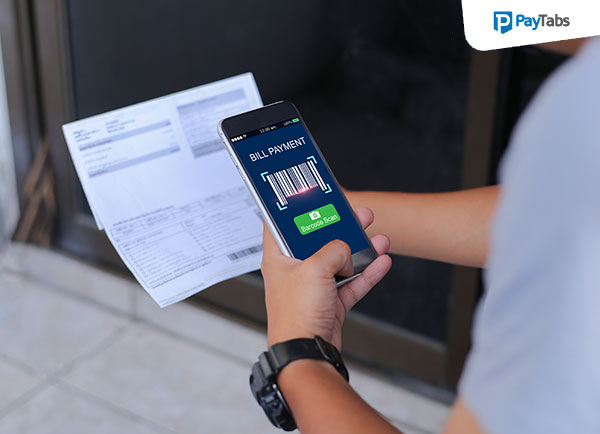
The ever-increasing use of mobile phones in day-to-day lives is redefining the landscape of financial services and it is impacting banks, NBFCs, insurance companies and even online stores in various ways.  Today, the digitally aware section of society is using their mobiles to receive messages from financial institutions, pay EMIs, shop online, transfer money and book a restaurant or movie easily. Mobiles are replacing the conventional financial practices and you can now buy anything online without having to use cash or card, thanks to e-wallets.  This is because even smartphones have become cheaper and can be used even by kids and the elderly. Now let’s take a look at how mobile is revolutionizing financial services:

  • Impact on financial lenders – The banking sector as well as NBFCs are embracing mobile technology these days to make their operations smoother, and to reach out to a wider section of the society. Since mobile phones are widely available in rural and suburban areas today, a farmer too can get a loan conveniently with a single phone call or text. A small rural business can get funding even while sitting at home and he or she will receive notifications through the mobile phone as well. Opening an account with a bank has become convenient too this way. So, mobiles have played a huge role in boosting financial inclusion and are encouraging the economically weaker section of the society to use banking services.


  • Impact on insurance – Insurance is something that a lot of people opt for, be it to protect themselves against financial emergencies or accidents or medical emergencies etc. But with the advent of mobile phones, more and more customers research online about various insurances before picking one. They can compare the cost and benefit of choosing different insurances on their mobile phones as well. Hence, it is in the best interest of the insurance companies to use mobile technology to advertise their policies and reel in both new and old policy holders. This way, they can reach out to more target audience than they previously thought was possible.


  • Impact on online businesses – E-stores these days focus on mobile shopping apps as much as they do on their website. This is because most customers use mobile phones or smartphones to shop for fashion apparel, cookware, hardware, medicines, cosmetics and even baby care products. They have less time to spare for physical shopping and are always on the go, which makes it tough for them to use a laptop or desktop all the time. Naturally, online businesses need to ensure that the payment gateway they offer on mobile apps is secure, fast and hassle-free. This will prevent shoppers from abandoning their carts midway because of a slow gateway or one which has many redirections.

Mobile revolution and payment gateways

From buying a pizza to shopping for wedding jewelry to ordering flowers for a birthday – everything happens on mobiles these days. And simple and smart mobile apps are hence popular. But without a proper payment gateway, you will never attract enough customers through mobile marketing and your sales will dip.

Gateways like PayTabs are hence a wise choice for online stores. They deposit funds in merchant accounts fast, protect customer and transaction data, prevent frauds, and are very easy to integrate into your mobile app. Moreover, as they offer a variety of payment options, shoppers can easily pay using their credit and debit cards. The shopping experience cannot get better than this! So, it is time to adopt mobile technology whether you are a business, bank or insurance company, without a second thought, as this technology is here to stay!
Switching Your Payment Gateway

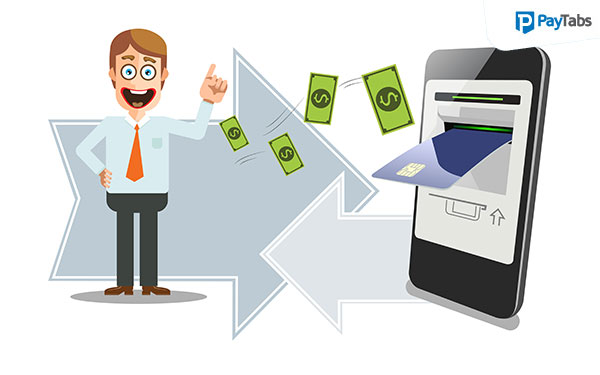
Switching Your Payment GatewayMost payment gateway changes are driven by a business’ need to support additional payment options or to accommodate growth. In some cases, merchants come across payment gateways that have more advanced features, are more professional looking, or offer a better experience for the customers.

If you are wondering how to switch payment gateways and the effect switching gateways can have on merchant’s billing, then you are at the right place. Good news is that switching payment gateways is an extremely simple process and in most cases do not have any impact on the billing process.  If you are switching payment gateways, here are few steps you need to follow in order to ensure a seamless transaction

First and Foremost, Check the Payment’s Gateway Compatibility with Your Store

Regardless of the reason for switching gateways, the first thing to ensure is that the payment gateway in consideration is actually compatible with your e-commerce store. It can get very problematic to find out that the gateway doesn’t work for your store after you have made the transition.

Review the Payment Options You will Be Adding or Removing

Moving on to the latest and most advanced payment gateway can bring great perks for your store, such as the ability to include payment wallets or direct integration via API. However, this can also mean that you will have to lose on some features that the new gateway may not be having. Therefore, it is important to evaluate what is being added or removed during payment gateway switching and weigh the pros (and cons) to be fully aware of what you are signing up for.

Consider the Change in Fees Structure

Most payment gateways charge a certain amount of fees. This can be on a monthly or yearly basis or on a commission basis where you pay a small transactional fee for every payment processed. Before making the transaction it is important to do the math to evaluate any increase or decrease in the fees. If the fee is absolutely going to decrease than the decision is easy.

However, an increase in fees is not always a bad thing. Sometimes an increase in fees can bring positive changes for your business. If you are getting access to more payment methods and to a gateway that is more secure and user-friendly, the switch is going to be worth it and you are more likely to get the money back in the long run.

Take Customer’s View Points in Consideration

Have you lost customers because they were unable to make payment through the current gateway? Or have your customers asked you to integrate additional payment methods?

In the end, it is the customer who is going to use the payment gateway and considering customer feedback can go a long way in improving the customer’s payment experience. If you have not collected any feedback yet, you can begin doing that now. Using social media pages like Facebook or Twitter to get customer’s can help you hear your customer out.

Plan for Any Possible Downtime

Once you have made your mind to switch the payment gateway, the final point to consider is whether changing gateways will bring any downtime for your store? If you don’t have provision to try out the new gateway prior to launch, you will need to figure out the best time to have a downtime. This should be the time during which you receive the lowest of traffic and sales.

The key is to think of a time that will have the least impact on the shopper. Instead of rolling out errors, you can create a landing page to inform your visitors that your store is temporarily down and will be back to service soon.

During this downtime, you can make the transition, test the gateway and take everything live. If you do have a test version of your store, test the new gateway thoroughly and by making demo transactions before deploying it for your store.

7 Tips for Safe Online Transactions

7 Tips for Safe Online Transactions

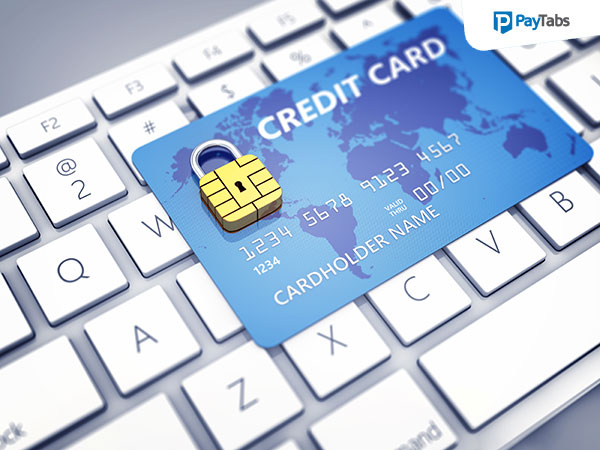
There are many reasons to be vigilant while making payments online. Online frauds are on a historic rise these days. According to a shocking statistic from Juniper Research in 2016, up to 70% of all types of credit card frauds are mainly the card not present (CNP) transactions.

Both merchants and customers are targeted by these scammers in the United States. In the September month alone of 2014, 52% of total online attacks were recorded in the US. According to Juniper, the major factors leading to the astounding rates of online payment frauds are use of mobile payments, unprecedented growth of e-commerce, manifold increase in money flows worldwide, data breaches and Card Not Present fraud influx.

There are different types of fraud in the e-commerce space and those frauds include clean fraud, account takeover, triangulation fraud, affiliate fraud, Merchant fraud, identity fraud, and reshipping.

Here are seven tips for safe online transactions.

1. Use advanced anti-malware program
It will protect both classified and unclassified attacks on your computer and other digital devices you are using. Make sure your anti-malware program is updated or its auto update option is “on”. Make sure that the antivirus program is able to detect newly created and mutated malware threats even before it’s included in the database of the automatic updates.

2. Watch out for security vulnerabilities in your PC
Some of the malware programs are designed to manipulate the security vulnerabilities in the OS and web browsers and steal your financial data. You can run System Mechanic security optimizer, which will detect and fix such vulnerabilities in both the web browser and the operating system. Always keep your web browser and operating system up to date.

3. Make sure you are using a secure connection
When you are using a secured connection the URL begins with https://, but in all other cases it begins with http://. So make sure you are using https.

4. Deal with reputed websites only
Do not directly pay to any website unless you know about it. The advanced security features used in payment processor such as PayTabs will prevent your financial information from getting into wrong hands.

Using PayTabs is the best way to stay protected against suspicious websites and online crooks. The advance security features used by PayTabs will make sure that your confidential financial information is safe without any possibility of leaking.

5. Use credit cards for online shopping
There is a word of caution for all online shoppers: Make sure you perform online shopping using a credit card and not a debit card. What makes using debit card extremely risky is the fact that it is linked to your bank account.

With spending limit, credit cards cannot be misused to the extent a debit card can be. It is pretty easy to dispute fraudulent charges on a credit card as compared to recovering the money taken out from a debit card.

These days, onetime use credit cards are also in fashion. These cards are designed specifically for online shopping.

6. Do not use public computers
In order to maintain security during online transactions, make sure that you’re using your own computer or mobile device. Do not use the computers installed at public libraries or internet cafes, as these computers can easily be manipulated by tweaking its hardware or software.

7. Set a strong and complex password
Don’t use common passwords or the password that can easily be guessed. Use a combination of alphanumeric and special characters and make sure the password length is more than 6 digits.

Final words
If you suspect that your credit card has been misused, you can immediately inform your bank. If you are in the US, you can contact agencies like Experian, TransUnion, or Equifax. The sooner you report, the better it is. Your alarm bells should ring if the offer given is too good to be true. Always buy from a trusted vendor and check their address and contact details.

5 Reasons You Need To Use a Fast Shipping Partner

5 Reasons You Need To Use a Fast Shipping Partner

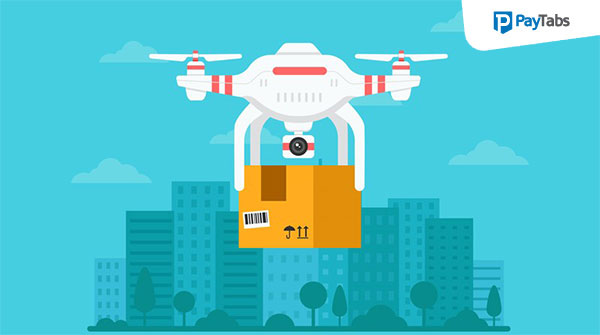
The e-commerce landscape is changing drastically every now and then. With faster options of delivery, the shift is towards instant gratification and reducing the wait time.
Many e-commerce giants are bringing innovation to their delivery systems, so as to facilitate the curious new generation of customers, who want instant gratification. The drive to bridge the gap between physical stores and e-commerce stores is primarily responsible for speeding the vehicle of e-commerce.

Fast delivery is an essential element of fulfilling your business obligations, where customers give you a deadline. Gone are the days, when people would wait for 5 to 7 days for delivery. Nowadays, it’s considered too long a time except for a few categories such as books or software that are not easily available at the local stores.

Here are five benefits of using a fast shipping partner that will help merchants grow their online businesses further.

  1. Branding

Imagine that a customer is flying in the next three day and would like to order a dress on an e-commerce store. If the delivery option says that it cannot be delivered before 4-5 business days, it will be of no use. She will need an e-commerce vendor who can deliver it in less than two working days. And if you are such a vendor, it will not only help you gain competitive advantage in terms of branding and customer service, you’ll most likely attract more customers in future.

  1. More sales

There are many customer types these days and among them, people craving instant gratification form a sizable chunk. If you are able to deliver quickly, you will definitely be able to catch hold of this additional chunk. Besides that, you can also charge extra for faster delivery and that will definitely add to your revenues.

  1. Lesser inventories

When you offer faster delivery options, your inventory immediately goes down, making you a lean and thin organization with a short order cycle time. It will help you to manage your business more efficiently without having to worry about managing a large inventory base.

  1. Better service to urban shoppers

With same day delivery, e-commerce giants are already working hard to grab the lion’s share of the market often referred to as urban shoppers. Faster delivery will make life easy for time-constrained urban customers and this way, online retailers will get access to a large niche without spending a single penny in advertising. Major online retailers for example are working hard to improve their services in urban areas, where they have regular customers with purchasing power.

  1. Build customer trust

The other benefits of fast delivery include the customer trust you gain and the word of mouth publicity you achieve. Your ability to deliver much faster than your competitors will make sure that you get the required attention, and customers will start flocking to you.  Customer trust also translates into free advertising and referrals, which increases your sales in geometric progression.

In order to do it, your shipping partner should be reliable and fast. Orders should in no way get lost or confused in the process of speedy delivery. Make sure that delivery is not only safe and cost-effective, but is also transparent and customer-oriented.

Five Payment Processing Challenges For Small Businesses

Five Payment Processing Challenges For Small Businesses

The payment industry today seems to be thriving with each passing day. While there is nothing more enjoyable than making money from your business, collecting money seems to be a totally different game. Unlike in the past, people now have no qualms about making payments online. More and more people, especially the current generation prefer using online modes of payments and like to go cashless. With an easier than ever acceptance of credit and debit cards, online payment has become much more sorted and simple, but it does come with its own set of challenges. If you run a small business, payment processing can get a little bit confusing and demanding. To prepare you for the worst, here are five biggest payment processing challenges that you are likely to face:

  1. Frauds

Well, who has not heard of credit card frauds?  Those still remain the biggest reason for most customers to opt for cash on delivery. They have been in existence since a long time and pose a threat to not just customers but to business entities as well. While advancement in technology has made online payment easier, it has also given birth to new types of frauds. Hence businesses need to be proactive about keeping the information of their clients secure. It is also important that as a business owner, you complete the audit of your processor. This can be done by hiring an audit expert who can evaluate your current security measures and warn you against possible vulnerabilities.

  1. Chargebacks

Chargebacks are one of the biggest challenges faced by business owners. Also known as processing fee, its amount depends on various factors like type of business, types of card used, and modes of payment and size of transactions. It is important that you remain in constant liaison with your provider and discuss how each fee works. There are ways to negotiate or avoid a few charges. So it is advised that business owners stay informed.

  1. Payment support

The world is always up, round the clock, so transaction issues are also expected to pop up anytime – even in the middle of night. It is important to have a payment processor support in after-hours too. If your provider refuses to offer that, you may want to rethink about sticking to your current provider. The processor should not leave you or your customers hanging and should always be ready to troubleshoot any problems that arise.  Having access to tutorials and video how to-s is a bonus.

  1. Payment integration

Payment processing is one of the most crucial components of any business. This seems like a common knowledge, yet, many businesses do not pay enough attention to the importance of an effective payment system. The technology available to collect payments is quite complex and needs to be given careful consideration. That is not all, even when your payment processing is successfully integrated, the cost can go up very significantly, especially for small businesses wanting to accept payments online. It is suggested by experts that business owners look for payment integration providers that have built an API suitable for your business.

  1. Compliance

There are a myriad of compliance issues that can appear for businesses in the online payment landscape. Technology certifications and challenges like PCI are just a couple of them. Needless to mention, the regulatory requirements can sometimes get extremely overwhelming for a small business entity as a non-compliance with any of legal regulations can lead to hefty fines and penalties. This makes it all the more important for business owners to work with a processor who can help you stay up to date with legal norms and regulations for your business type.

It is not only imperative, but mandatory that as a business owner you look for a processor that offers a broad set of solutions and products along with best in class support system that fits well with payment processing needs of your business.

PayTabs
Privacy Overview

This website uses cookies so that we can provide you with the best user experience possible. Cookie information is stored in your browser and performs functions such as recognising you when you return to our website and helping our team to understand which sections of the website you find most interesting and useful.