×

A Guide On How You Can Bring Automation To Your Online Business Part I

A Guide On How You Can Bring Automation To Your Online Business Part I

A Guide On How You Can Bring Automation To Your Online Business Part I

Image credit: Flickr

Do you NEVER seem to have enough time to deal with the important stuff in your business? Struggling to keep up with the demands of becoming a brand publisher?

Wouldn’t it be great to have more time to focus on the strategic elements of your business…?

Well, automation can help you achieve that.

Here are some online automation hacks to help inspire your business strategy reboot — read part I in our blog series now.

Fintech innovations

Let’s start with the financials: after all, every business in the world needs money to keep the wheels turning.

From managing supplier payments to keeping up with the demands of bookkeeping — financial tasks and admin can massively eat into your profit margins.

The trouble with financial tasks is that if they are not done correctly, it could spell disaster.

  1. Financial technology has seen some exciting developments these recent years — from blockchain to cloud accounting, there are so many ways to improve and simplify your financial operations.
  2. Even simple choices like what payment gateway you go for will determine your business’s financial ecosystem. Opt for a system that’s smart and integrates with other services and platforms so that you don’t have to rely on expensive workarounds.
  3. Accounting is a big business overhead, especially when it comes to expenses and taxes. Invest in a smart system that allows you to automatically sync paper receipts into your online finance system.

Martech leads the way

Marketing technology is another ally of automation. Nowadays, there are enough tools and platforms to automate pretty much any marketing task under the sun.

Martech scales up and down, and can be leveraged by organizations large and small. From simple things like automated proofreading to automating your content strategy with HubSpot, there are tools out there that can help you create, launch, and share better content.

Key areas where you need to embrace automation:

  1. Remarketing is a great way to target interested parties — whether that’s website visitors who haven’t converted, or people who’ve engaged with your content. The beauty of remarketing automation is that once you put in the work to create a funnel and populate it with ads, you can just click ‘play’ and let the system do the rest!
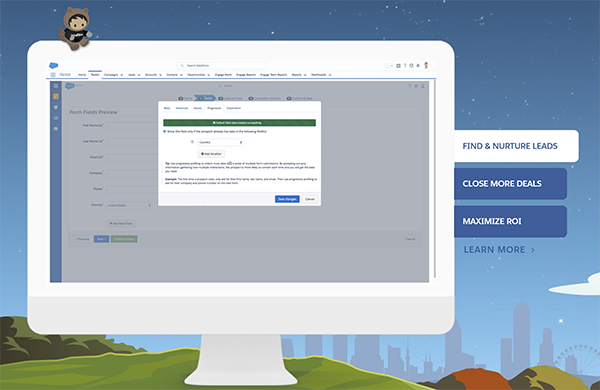
  2. Email is a big marketing channel, whether you are in B2C or B2B. Create funnels using services like Pardot (a Salesforce tool) and run your lead generation campaigns more cost-efficiently.A Guide On How You Can Bring Automation To Your Online Business Part I
  3. Social media can be a massive time sinkhole, so be more efficient about it and embrace automated content creation, mass scheduling, and social listening to help you do more. Social media tools aren’t just about saving time — they will actually bring you better results by optimizing posting times, lengths, and formats.

A Guide On How You Can Bring Automation To Your Online Business Part I

About the author

Victoria Greene is a branding consultant and freelance writer. Big fan of automation when it comes to content marketing. Helping ecommerce brands and startups scale faster and better.

How to Quickly Create an Online Store and Integrate a Payment Gateway

How to Quickly Create an Online Store and Integrate a Payment Gateway

Your ambitious entrepreneurial journey starts with launching an eStore. Before you do that, you need to contemplate which e-commerce platform to choose.  As far as integration of a payment gateway is concerned, you have many choices. We’ll discuss these aspects of setting up and launching an eStore in this article.

While choosing an eCommerce platform, you have the following three options available:

A. Open source software

B. Dedicated platform

C. Software as a Service (SaaS)

Each one of these platforms has different features and you can choose the one that matches your needs.

A. Open source software

The most cost-effective solution for you is to go for open source software, where you don’t need to pay for any license or subscription fee. However, it requires you to have the knowledge of software development in order to install and manage the platform.

If you are not trained in IT skills, you will have to hire someone for all of your updates and changes required to be made on the website.  But, this can be a costly affair as you would have to pay certain charges for hosting, server and certificates.

The other drawbacks with open source platforms include security concerns involved and lack of customer support.

The popular open-source platforms include Shopify, WooCommerce, OpenCart and Magento. These platforms have different features in terms of user-friendliness, price, security, and integration.

B. Dedicated platform

Another option which is probably not so ideal for startups and small store owners is a dedicated platform. Usually an IT company will provide you a dedicated platform according to your specific requirements and offer tailored solutions for those who are aware of the different functions and features that they would like to have on their website.

It is both expensive and time-consuming and not ideal for startups and businesses on a shoe-string budget. If you have a highly unconventional system of sales and storage, then it’s for you. It’s an ideal solution for big corporations that are keen to offer the best user experience.

C. Software as a service (SaaS)

If you like a platform which you can manage anytime, then SaaS is the right option for you. SaaS has a lower initial setup cost. When you choose this option, you can pay according to the number of transactions.  You can also be charged according to the number of users.
As compared to an open source platform, SaaS offers you the desired freedom. It allows you to conveniently make changes as and when you want.
SaaS is also good for branding and building long term relationship with your customers.

Using an online marketplace to sell your products

If branding and customer service is not on your mind and all you need is to start selling online, then instead of using the platforms and creating your own eStore, use the established marketplaces such as Amazon, eBay, or other regional players.

It is extremely convenient and you do not need to invest in marketing, technology and tools. However, there is high competition on these platforms and you need to pay some commission plus the listing fees.

Moreover, you will not be able to provide sufficient customer service, so it’s a bad option for branding.  However, if earning revenue on your online sales is your sole objective, this can be the best option.

Integrating a payment gateway

If you want to integrate a payment gateway into your online store, you can use the plug-ins such as Zen Cart, Magento, OpenCart, osCommerce, Prestashop and WordPress, etc.  When you integrate a payment gateway, it will automate the payment transaction between the merchant and the customers.
It will also enable the customers to use their credit cards and other modes of payment methods so that they have a variety of payment options. Integration should be easy and payment gateway should provide a robust customer support so that the issues are resolved within a specific time frame without affecting your business.

Choose PayTabs as your payment gateway as it comes with great customer support and standard technologies to quickly and conveniently integrate into your eStore.

These 10 things will help protect your Ecommerce Business against fraud

These 10 things will help protect your Ecommerce Business against fraud

The good news is that e-commerce is flourishing like never before. The volume of ecommerce transactions worldwide is growing by leaps and bounds every year. In fact, according to reports by Statista and emarketer., the total volume of global e-commerce is expected to cross the $3.03 trillion mark by 2019.

The not-so-good news is that along with market expansion, the incidents of online frauds have also increased. And as the world moves ahead, fraud has become more sophisticated. According to the Global Fraud Index, which tracks and analyses changes in fraud patterns by studying the transactions of more than 5,000 e-commerce merchants in North America, Asia and Europe, $3.3 billion was lost by merchants as a result of account takeover frauds in the second quarter of 2017.

Online frauds usually result in fraudulent transactions, account take overs, stolen goods, and unauthorized requests for refund. To cover your e-commerce business against fraud attack, let’s understand what we can do.

Here are 10 ways to reduce eCommerce fraud activities:

  1. Begin with your website security

Make sure that your website is not vulnerable. You should hire security experts to ward off such kind of possibilities. Make sure that your website is integrated with a secure payment processor.

  1. Train your staff

It is high time that your internal staff should be aware of the patterns of behavior usually observed during a fraudulent activity and also the security measures associated with it. They should also be trained to quickly spot an unusual activity.

  1. Use security codes

To ensure the physical possession of the credit card by the user, make the use of CVV mandatory. CVV is the code which is printed on the back of the credit card.

  1. Don’t allow customers to buy in guest mode

E-Commerce websites allow you to buy on guest mode, which means that you are not required to set up an account with the website and you can just provide the billing and payment details and make a purchase. While setting up an account on the website, you are required to provide more information about yourself and that minimizes the frauds.

  1. Contact the customer if required

If you suspect any fraudulent activity, immediately contact the customer on the contact number provided by them and make sure that you are talking to the actual customer.

  1. Use tracking numbers

You should track the order delivery and record every detail associated with it.

  1. Compare email address with IP address of the user

You can use free verification services to make sure the customer is ordering from the same location with which they are registered with you. Remember, during most of the frauds, users initiate a purchase from far-off places and sometimes even different countries.

  1. Compare shipping and billing addresses

It is also a form of preliminary check and you can use address verification services to ensure that these two addresses are not dramatically different. However, there can be exceptions to that – it usually happens when a person wants to gift something to one of his/her friends or relatives. However, you can always contact the customer when required and confirm the order as a security measure.

  1. Take signatures on delivery

It is for those customers who frequently return and dispute the transactions. Such customers claim that they never received the product and ask for a chargeback. To prevent such frauds make sure the delivery boys get their signature on delivery.

  1. Use a fraud protection service

The staff at a fraud protection service is specially trained to detect fraudulent activities during millions of transactions. They use human intelligence along with machine learning techniques to help you identify a possible fraud. When you hire any such service, you can minimize fraudulent activities on your website.

Frauds happen everywhere and they make a dent in your profits and sales revenue. The above steps will definitely help you prevent those frauds and run your business smoothly.

9 Things to Look For In a Payment Gateway

9 Things to Look For In a Payment Gateway

If you are setting up an e-commerce store, one of the most important things you will be looking for is a payment partner who is going to help you enable the whole payments process.

With the right payment partner, your customers will be able to pay you easily and is more likely to come back to your website. There is just one small problem – how do you choose the right payment gateway?

With the market cluttered with several payment gateway options, it might be hard to choose the right one. In order to choose the right processor, you should do some homework and consider some points that are relevant to your business needs.

So in this article, we are going to explain 9 important things to be considered before you choose your payment partner.

  1. Look into location and incorporation details

Most of the times, the ideal payment gateway for you should be the gateway that is from the same location/country, your business is incorporated in. The corollary is also true.  For example, if you want a European payment gateway for your business, you need to incorporate in Europe itself.

  1. What’s the pricing and the providers’ fees?

It is extremely important to know the fee structure of your payment processor, if your business model is extremely price sensitive. Most of the fintech companies fall into this group and a slight variation in prices can alter their profits and may even turn it into loss.  Don’t get carried away by the advertisements that announce lowest fees or discounts, as it just might act as a catch to attract clients. Find a payment gateway provider that offers transparent fee structure without any surprises afterwards.

  1. What’s the technology

The bottom line is that you should choose a payment gateway that is supported by robust technology. This should not only offer simple, user-friendly solutions but also protect all financial transactions against fraud.  Also, your payment gateway should be secure enough to protect all your customer’s data and also have lower processing costs.

  1. How good is the support

Operating in a global market involves many unexpected and occasional incidents that can be bad for your business. That’s why support is considered to be a crucial factor to instantly fix the problems you face. Support should be simple and hassle free and ticketing system should be robust and fast.

  1. Does the operator offer international payments?

Check whether your payment gateway accepts international payments. If you are a growing business which is looking for selling to the global customer in the future, you might want to go with payment gateway which accept international currencies and offers alternative payment options. While local payment providers might be cheaper in certain cases, global payment gateways like PayTabs come with extremely attractive features like multi-currency payments, acceptance of a variety of cards, settlements and alternative payment arrangements. The latter is probably the better option if you are looking for revenue from around the world.

  1. What are the safety and security features

It is extremely important to ensure the safety and security of your customers, while they purchase online.  Maximum frauds happen while your customers try to make payments online.  There are different ways of protection that a processor can implement such as 3D secure payments, verified by Visa, and token system etc. Your gateway should always follow the guidelines of PCI to minimize the chances of frauds.

  1. Regular payments

If your business model requires short-term payments and settlements, it is ideal to go for a processor that doesn’t expect you to wait too long. Check the cost of the transfer and make sure that the fees are not too high. Always check what your payment gateway is charging for wire transfer. Some gateways charge a low fee and some might ask you to pay a higher fee.

Make sure that the rolling reserves are kept to a minimum. Rolling reserves is a kind of money that a payment processor or a bank can keep with themselves for a period of three to six months as security money against possible charge-backs.

  1. Does it allow invoicing

It might make sense to go with a payment gateway which offers built-in invoicing services. This not only makes it easier for you to raise instant invoices for the customer but also eliminates the need to move to another platform for invoicing.

  1. Reporting features

Another important thing to check is whether your payment partner is offering detailed reporting services. Once your business starts, you will want to review the transactions, review chargebacks in any, or do an analysis of any extra charges that you might have incurred while using the gateway. Try to go with a gateway that offers a better user experience.

There might not be a “perfect payment gateway” that fits the needs of every business. But its worth going the extra mile in order to find your right payment partner since a bad choice will not only cost you money but also your customers. The one thing to probably always keep in mind is the security aspect. The right partner will help you provide all the necessary tools for helping your business grow.

PayTabs
Privacy Overview

This website uses cookies so that we can provide you with the best user experience possible. Cookie information is stored in your browser and performs functions such as recognising you when you return to our website and helping our team to understand which sections of the website you find most interesting and useful.