×

Forging the Future of Payments – The Emerging Trends

Forging the Future of Payments – The Emerging Trends

Forging the Future of Payments – The Emerging Trends

With the rapid pace at which the payment industry is gathering momentum, the global payment environment will go through a sea change in near future. There are many factors responsible for an ongoing shift in the payment industry.

We are going to discuss these trends in the light of the 5 major factors that are as follows:

  1. Increasing regulations and compliance post global recession of 2009
  2. Entry of new players in the market and increasing competition
  3. Economic growth in emerging markets and a resultant boom in payment flow across new regions
  4. Innovation and unprecedented growth in technology

Technological innovation is paving the way for increased accessibility, efficiency, velocity and reach, as far as payment transfers are concerned. It is responsible for a complete shift as to where, when and how payments are initiated and transferred.

Banks need to be cautious and monitor the situation carefully as to how developments are taking place in the payment industry and what opportunities and threats it is posing for the banks. In order to thrive, they need to be alert and ready to capitalize on the emerging possibilities.

  1. The impact of regulation

Increasing regulations is the biggest factor that is going to impact this industry in future. With an unprecedented growth in the volumes of cross-border payment transactions, the volume of these transfers has doubled from US$10 billion in 2012 to US$18billion in 2018.  Such a huge volume of international transactions warrants strict monitoring and control.

Banks need to keep an eye on the complexities involved with local and international regulatory framework. The other influencing factors are current practices, currencies and payment formats.

Changes in regulatory compliance can lead to enormous innovation, where it becomes necessary to reevaluate both internal and pan-industry practices.  It will open a whole new world of opportunities for banks and corporate sector.

To simplify and harmonize payment practices across Europe, EU has introduced the Single European Payments Area (SEPA). Fixing regulatory and compliance issues, SEPA has harmonized and standardized the payment market and eased local transfers. Such integration activities are likely to take place in other regions as well.

  1. Entry of new players

Many new players are likely to enter the payment industry and those can be online payments providers, virtual marketplaces and large technology and social media companies such as Google, WhatsApp, Amazon, and Apple, etc.  A thriving fin-tech ecosystem will boost the market.

The factors that are responsible for attracting new players in this market are the current secure payment propositions. The industry as a whole is gravitating towards new payment methods that are not constrained by banking regulations and offer convenient and innovative methods to the customers.

  1. Economic growth in emerging markets

Shifting economic landscape and changing global demographics across the planet will also shape how future payment flows will take place.

A soaring middle-class population and changing economic landscape is creating global opportunities in this industry. In the year 2000, the US and Western Europe together controlled 70% of global financial assets, but by 2020, it is estimated to fall to 45%. China, on the other hand, is flexing its economic muscles and it has seen a 600% growth in global financial assets since then.

  1. Rapid growth in technology

With the rapid pace of change in financial technology, many regions such as Latin America have experienced unprecedented growth in smartphone penetration. Nearly half of the adult population in this region doesn’t have a bank account. So, there is huge potential for payment processors and mobile banking.  Technology allows you to not only transfer the funds instantly but also to track it in real time.

Payment processors like PayTabs have a real advantage here because they have future-proof strategies in place that include customer-centric approach, convenience, flexibility and multi-currency support.
Tips To Choose the Right Payment Integration Method for Your Ecommerce Site

Tips To Choose the Right Payment Integration Method for Your Ecommerce Site

Advancement in technology is gradually making payment integration easier and simpler. However, as new entrants to the world of eCommerce, you may find it a little difficult to choose the right integration method for your eCommerce business. At present, there are three popular integration methods and in this article, we are going to discuss these options in order to help you choose the right option for your business.

  1. Hosted checkout pages

As a matter of fact, this option can be used by any type of merchant, whether small or big.

There are many reasons why small merchants should choose this as their checkout solution. First of all, there is no need to hire a software developer when you integrate it with your website. It also works well when your website is not PCI compliant.

Hosted checkout pages are also beneficial for medium to large-sized merchants, who have already designed and created their checkout pages. This is the quickest way to supplement your alternative payment method. Almost 60% of the shopping cart abandonment incidents take place because people are not able to use their preferred mode of payment. It is more prevalent in the countries where cards are not used frequently.

The benefit of hosted checkout pages for merchants:

It has the following benefits for the merchants:

  • PCI compliance is not complicated
  • No need to store card information
  • Ideal for quick global outreach
  • Supports all major credit cards and major currencies
  • Supports local payment options
  • Offers easy integration

  2. Payment API

If you are among the perfectionists who would like to exercise extreme control as far as design and user experience of checkout pages is concerned, a payment API is the right solution for you.

For card processing, payment API is the ideal solution whereas if you need both card processing and value added services such as coupons and catalogs, currencies and subscription billing, Payment Plus API should be tried.

It doesn’t require customers to leave the site in order to check out and makes checkout a simple process with minimum steps to complete.

The benefit of payment API for merchants:

It has the following benefits for the merchants:

  • The XML based API doesn’t require any specific programming language
  • A native mobile checkout flow can easily be developed
  • Easier PCI compliance through client-side encryption
  • Tokenization enables the sellers to save the card information of the shoppers so that the returning shoppers need not repeat the process all over again

Payment API makes the checkout safe and secure.

 3. Shopping Cart

If you are using any shopping cart such as Magenta or Prestashop, the “shopping cart” is the ideal integration method for you. It offers users almost the same benefits as they get in hosted pages. It is comparatively easier and simpler to setup and it doesn’t require you to make any payment.

Choosing a payment processor

Your selection of the integration method is very important to offer better user experience and it decides your future success in the eCommerce space.  But, there are other factors as well that are no less important. Make sure that the payment processor you choose meets all your business needs and completely fits into your business model.

Make sure your payment processor is able to upgrade their technology and services to match your needs when you grow.  Make sure they offer the functionalities you require at present and might require in future.

When you come to PayTabs, we sincerely listen to your needs and answer your queries.  We have imbibed a culture of striving to meet your business requirements. We are also determined to resolve the issues you face during your journey to become a successful eCommerce entrepreneur.

Get in touch with PayTabs today and talk to a consultant to discuss your business needs and how to achieve higher conversion.

PayTabs is taking payments to a new level at Seamless Middle East, Dubai

PayTabs is taking payments to a new level at Seamless Middle East, Dubai

With businesses and companies getting increasingly digitized, the spotlight on online payments are shining brighter. And PayTabs as a leading payment gateway provider is making the lives of many virtual merchants convenient. To spread the word, it will appear on the Seamless Middle East, Dubai platform from 15-16 April at the Dubai Exhibition and Convention Center.

Payments Everywhere, PayTabs Everyware!

Though most businesses are aware of the benefits of a trustworthy payment gateway solution, there are others who are yet to join the bandwagon. As e-stores continue to mushroom in the Middle East every day, merchants undoubtedly need to ensure they receive their payments safely and quickly. And this is exactly what PayTabs promises and intended to showcase at the Seamless Middle East.

PayTabs will have the opportunity to connect with over 10,000 ecommerce companies, retailers and key providers and vendors from the payment industry. This is thanks to PayTabs state of the art 64sqm exhibition booth at the exhibition, which will showcase the firm’s innovative new products and services.

As a proud gold sponsor of the Seamless Middle East event, PayTabs plans to elaborate on topics like ecommerce, online retail payments and the retail ecosystem. This event is the perfect platform to share innovative ideas and the latest in technology and industry trends. On 15th April 2018, the Chief Digital Officer of PayTabs, will deliver a session on how online payments can be married to customer loyalty for greater customer experience and impact.

PayTabs will showcase its cutting-edge products including Ninja, FarahPay, Vera Pay and Juman.co as well. These programs are ideal for online merchants in varying industries who wish to embrace a simple and trusted payment gateway and open their business to the rest of the world. Interested retailers will receive live demos on how to utilize PayTabs services in the best manner through these programs, learn to manage transactions and invoices, and how to handle recurring payments. Moreover, some programs like Ninja will allow freelancers to refer PayTabs to other businesses and earn an income through the referrals.

Why PayTabs is the future of online retail?

As an intelligently developed online payment gateway, PayTabs lets e-stores receive payments from anywhere in the world in a very secure and hassle-free manner. It allows you to accept 168 currencies, manage your business digitally through a smart dashboard and its services are priced very reasonably too. The checkout process is simple, seamless and hence keeps your customers hooked till they make the final payment.

PayTabs is also easy to integrate with your platform and mobile apps, and it is PCI-DSS certified as well. Their dual layer fraud protection and 3D secure authentication systems are extremely robust and customer information is well-protected. Setting up an account on PayTabs is super easy too and a sales representative will get in touch with you to familiarize you with the gateway and its functioning.

Visit PayTabs at Seamless Middle East from 15-16 April 2016 and soon, you will be able to manage your business online keep track of payments and even receive financial progress reports that indicate how well your business is doing and what you can do to take it a notch higher with PayTabs!

5 Tips to Protect Your Business When Dealing With Payments

5 Tips to Protect Your Business When Dealing With Payments

Most of the credit card frauds that took place earlier were related to “card-present” cases. These days with adequate security procedures like EMV (Europay, MasterCard and Visa) chips to make transactions secure, something sinister is happening.

A new type of card fraud is emerging with “card-not-present” type of transactions. In such type of card payments, you are not physically swiping the card, but are using it on online platforms to perform E-Commerce transactions.

In order to deal with such type of card or identity theft, users are requested to get back to their credit card provider or the issuing bank for the reversal of the fraudulent charges. In the normal E-Commerce environment, where a buyer and a seller are involved, merchant is held liable for any fraudulent charges and they are supposed to reverse these charges.

These days, a new type of e-Commerce environment is emerging, where different buyers and merchants come together on a single platform. In this case, the platform-merchant relationship decides as to who is to be held responsible for frauds.

Recently, a trend is emerging where a swindler masks as a merchant and then they manipulate the platform to commit fraud before disappearing from it. In such cases also, the platform is held responsible for the fraud.

Now we’ll discuss what a platform owner can do to protect itself and its buyers against such frauds. Here are 5 tips to prevent such incidents and minimize the losses due to fraudulent cases.

Educate yourself on credit card fraud
There is no fixed modus operandi for credit card and other types of payment frauds because they are constantly evolving. Criminals in cyberspace use innovative techniques and latest technology to commit such acts. So what is recommended today may not be relevant in the future.

Constantly update yourself and keep on exploring newest fraud tactics. Employ latest technology and find the best ways to deal with the current threats efficiently. There are different types of frauds prevalent in the online marketplace today and these include buyer identity fraud, merchant identity fraud and merchant credit risk. Scammers can mask themselves as legitimate buyers and sometimes merchants as well.

Implement simple protection
To start with, employ the proven tools and techniques to avert fraud. For example, user data should be validated first with database companies like Equifax, Lexis-Nexis and Experian. You can also perform a history and credit check about the user, so as to make sure that he is a legitimate buyer or seller.

Do some social data mining
Entering into advanced fraud protection measures, social data verification can supplement our efforts to protect customers from fraud. We can perform data-mining from platforms like Facebook and LinkedIn. We can pull these social insights to validate user identity through them. Scammers can create fake social media IDs, but it doesn’t take much to find if it is their regular ID or if it is designed in a hurry in order to commit a fraud.

Use your instincts
If something sounds too good to be true, stay away from it. If someone offers a deal that they are going to pay for the project in advance and it sounds too good to be true, there is high probability that it can be fraudulent.

Don’t do dilly dallying
Frauds are inconsistent and unpredictable in nature. Sometimes, frauds do not take place for a long time and suddenly you observe a surge in fraudulent activities. So, regularly monitor these activities with the help of latest tools even if no fraudulent activity is detected on your platform. Always stay alert as fraudulent activities can come as surprise and hamper normal business activities. They can also affect your profits and employee morale negatively.

Should You Use Chatbots for Your Small Business?

Should You Use Chatbots for Your Small Business?

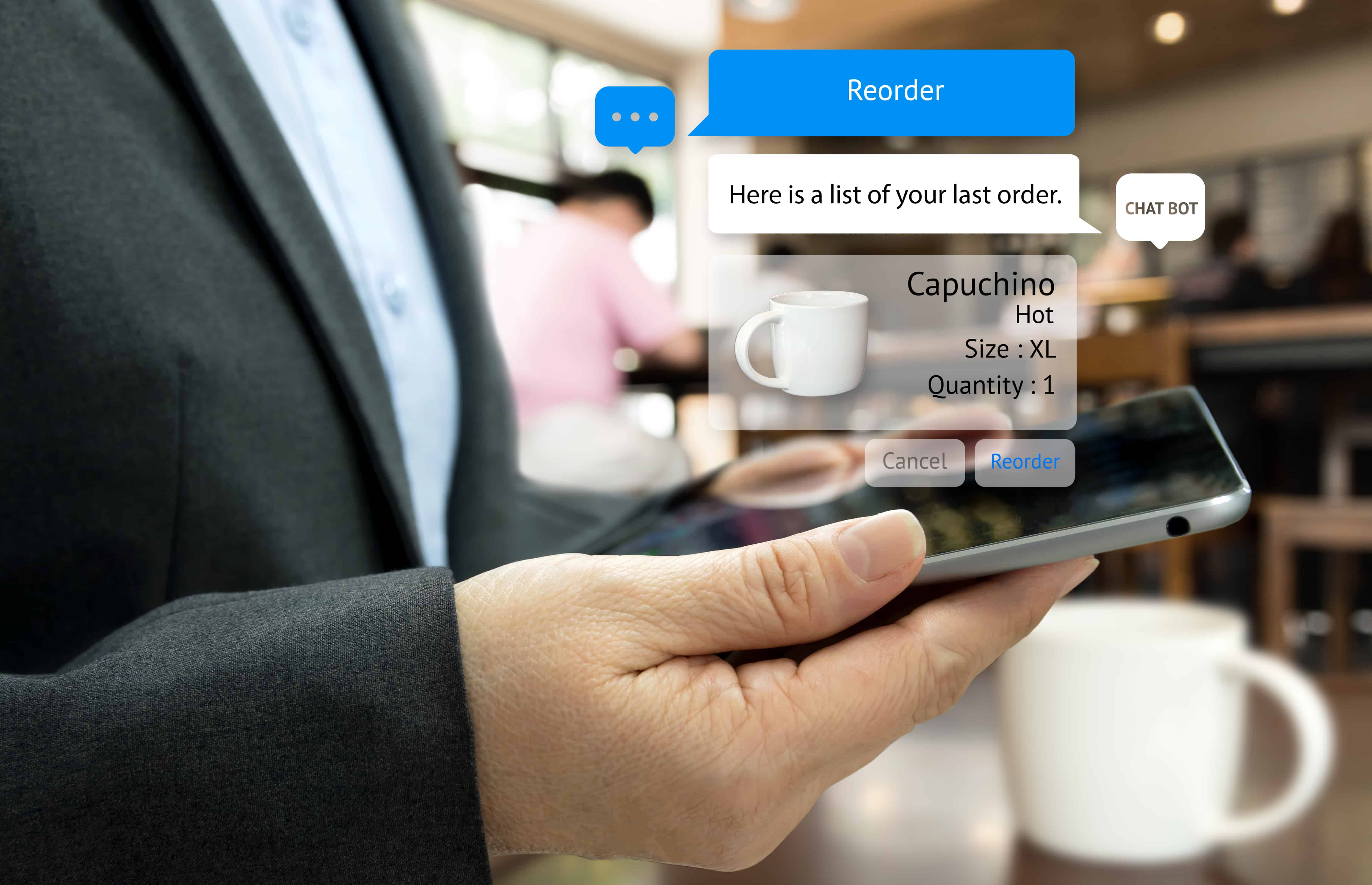
Automation is the way ahead, and businesses are beginning to realize that. One way or the other, companies are trying to automate as much as possible, thus minimizing the need of human intervention. So far, it has worked well. But while the big players reap the benefits of chatbots, can small businesses enjoy some of it too?

The answer is yes. Chatbots are not grand mechanisms suitable only for big conglomerates. Innovative yet simple, even a random blogger could use chatbots to be more efficient.

Analyzing the benefits

Here is how chatbots can improve things for small businesses:

1) Improving the reach

With chatbots, you can be there for your customers 24×7. Chatbots ensure that nothing, from interaction to complaints, go unnoticed. The interactivity goes a long way in growing the reach of your business and thus, the overall growth.

2) Simple to use

Many innovative ideas came and went without making a mark. The reason chatbots stuck was their sheer simplicity. Understanding chatbots is something that even the most non-technical person could do. While it is no big deal for a business-owner, it is an even smaller deal for the customers. In other words, using a chatbot is far simpler than many other ways of interacting with a business, which is why chatbots are fast gaining popularity among users.

3) Cheaper than you guessed

Once you get a chatbot, everything else is free of cost. Chatbots do not need lunch breaks, vacations or weekends. After the initial investment, you can have chatbots working 24×7 without worrying about their salary. Compared to humans, it is both more effective and cost-efficient.

4) Customizable

When we hear the word “bots”, we imagine pre-programmed robot texts that are boring at best. However, the new-age chatbots are anything but boring. Highly customizable, chatbots could be tailored to suit the specific needs of your customers. You have to program all the responses, of course. But from the user’s perspective, chatbots appear like cool agents who have a quirky response to everything.

Few things to consider

Chatbots are great, of course. But that doesn’t mean they are the solution to all your problems. There are some reasons why chatbots may not be the best solution for your business. Here are some:

1) Alienation from the customers

One of the biggest (and perhaps rightful) concerns small businesses have is getting alienated from their customers. Chatbots are great for programmed responses, but even the Machine Learning-powered chatbots could not hope to compete with the level of personal touch human interaction provides.

2) Not everyone’s cup of tea

One thing to keep in mind is that chatbots work best with B2C businesses, where template answers to predictable questions get the job done. However, in B2B companies where complaints are raised only in serious situations, chatbots are largely ineffective. Thus, big or small, the type of business largely defines the need of chatbots.

3) Skewed demographics

As a business owner, you would prefer your audience to be diverse (until and unless you are extremely niche-specific). However, chatbots have been found to be the opposite of diversity. Majority of chatbot users are teenagers, while an overwhelming majority are Americans. Restricting your audience to a single country and age group is not the most desirable outcome you might have hoped.

Conclusion

So, chatbots are not meant for everyone. But, for the large part, they are agents of innovation and effective in most cases. Especially if you are a B2C business that needs to be in touch with your customers at all times, nothing beats chatbots. In the coming years, we will see a growing use of automated tools for customer interaction. It is your chance to be part of the future, now.

PayTabs
Privacy Overview

This website uses cookies so that we can provide you with the best user experience possible. Cookie information is stored in your browser and performs functions such as recognising you when you return to our website and helping our team to understand which sections of the website you find most interesting and useful.