×

Cross-border e-commerce trends that you just cannot ignore

Cross-border e-commerce trends that you just cannot ignore

Cross-border e-commerce trends that you just cannot ignore

E-commerce is a rapidly evolving area and it can be a daunting task trying to keep up with the trends. With the advent of technology, some of the ways in which we meet our basic needs have undergone a tremendous change. Online retailing is one such major gift.

As more and more people have begun to prefer e-commerce, it is becoming essential to adapt accordingly for the businesses to keep growing. Brick and mortar stores are no longer the preferred choice, as many brands and companies have begun to adopt e-commerce instead.

And the e-commerce market is not confined to a specific location, like a particular country, but has a worldwide presence. In keeping with the times, it has become vital for businesses to keep up with cross-border e-commerce trends, not only to sustain but to grow.

Access to the web

Everyone you meet, every person that you know and even people on the street, everyone owns a smartphone. As internet literacy grows, people find themselves with easier access to businesses around the world. This is a great time for businesses to expand into the e-commerce world and cash in on the general global trend of growth in internet usage.

Global becomes local

With the mammoth growth in internet marketing, more and more businesses are joining in the e-commerce world. People now have access to global stores right from their screens. Products are available from anywhere in the world and can be sent to anywhere. The need to travel distances to make specific purchases is long gone. The businesses that have made themselves available globally have seen massive growth and have managed to take over the cross-border e-commerce industry.

Ease of access

For the growth of any e-commerce undertaking, it is essential for the business to make itself as easily accessible as can be. With monetary transactions being a major concern for prospective buyers, providing secure and simple payment options is vital. There is a myriad of online payment platforms available that provide complete security and good services. Making the process of purchase simple is a great way to grow in the e-commerce industry.

Competitive prices

One of the most significant ways to make the consumers happy is to give them the best rates for your products or services. With e-commerce, it is all the more essential to keep on top of the competition at all times. With consumers having so much access to so many businesses, without having to physically go and find the best bargain, showing them that you offer the best product at the least price is vital. It is very important to change online prices according to the changes in currency as well.

Understanding the local consumer

When setting up a cross-border e-commerce business, it is essential to understand the customs and traditions of the local people. A smart study of the local market and its trends can help a business brings forth products and offers that the local majority cannot refuse. Catering to the needs of the local consumer in the best way possible is the only real means of survival when it comes to cross-border e-commerce.

Customer support and services

When competing in an e-commerce setting, it is wise to create an easily accessible customer support system. For international customers to feel safe and satisfied, around-the-clock consumer support system is a good idea. Auxiliary services not only keep the current consumer happy but also help bring in new business through word of mouth and internet reviews.

The Bottom Line

E-commerce is exploding and with it comes a great opportunity for local businesses to go global. By providing a great product, and a reliable payment gateway and customer support system, any business can establish a global presence in a short duration. However, as easy as that might sound, it is exceptionally important for businesses to stay on top of their game by adopting best business practices.

5 Common Myths about Merchant Accounts Processing That Can Lead You Astray

5 Common Myths about Merchant Accounts Processing That Can Lead You Astray

When the matter is about monetary transactions on your e-store, suspicion is always there. After all, you are bestowing someone else with the responsibility of handling your customers’ money. Then there are concerns whether transactions are secured against fraudulent attempts or not?

Various myths regarding merchant accounts processing have been circulating in the merchant community. If you are planning to open a merchant account with a payment solutions company, you should know about the common myths that may negatively influence your decision. Let us take a look at them.

All Payment Processing Operators Are Scammers

There are many credible service providers who provide quality services. Their terms of service will be crystal clear. Moreover, they will not have long-term contracts that will unnecessarily bind the merchant for a long tenure. They will let you know about all type of charges beforehand.

The Biggest Is the Most Trustable

You must have heard about the established online payment platforms that are visible everywhere – in search engine ads, on social media, and in renowned blogs. Even some of your merchant friends must have told you about them. But guess what, the biggest is not always the best. There are other service providers who may offer better services at affordable prices.

The lesser-known merchant account processors are more committed to providing personalized solutions to the merchants. They may have a secure procedure for processing payments, may provide services at the best rates, may have better enterprise-level hardware and software, and may take less time to initialize the setup. So yes, you should be willing to consider payment service providers who haven’t made it big yet.

Processing Charges Are Too High

Most of the times, merchants are not aware of the processing charges. Moreover, they assume them to be very high, based on rumors. But this is not true. Depending on the business turnover, you can decide to opt for payment processing services. If you have a massive turnover, it is advisable to opt for a merchant account with a unique merchant number. If you are a small business merchant, opt for a payment service provider that enrolls you in a shared merchant account setup.

Yes, there are charges associated with merchant account service providers such as termination fees, interchange-plus or flat rates, retail rates, monthly charges, and so on. But if you consider your transaction volume, the charges may not be that much. However, discuss with the service provider before finalizing the contract.

They Are All the Same

No, they are not. There are three types of payment processing companies – merchant account providers, payment service providers, and payment gateway providers. The merchant account provider is basically concerned with providing a merchant account and it may also provide payment processing service with the assistance of a third-party processor. The payment service provider does not offer a dedicated merchant account. Instead, it clubs your business with other businesses on a single merchant account.

The last one, payment gateway providers may either provide both merchant account and payment processing or provide only payment processing service. As you can see, they are not at all the same.

Not Better Than Local Banks

Banks do not offer reliable merchant account services, which are necessary to operate a business seamlessly. They will not provide you with the freedom to collect payments via various means, the hardware and software may not match the industry standards, and there is no reliability when it comes to backend support. Processing charges might be low but services are not always up to the mark.

Conclusion

You should not be guided by myths and rumors. Get hold of the facts before making your decision. This was our attempt to clarify some doubts so that merchants like you can make decisions that are beneficial for their business.

Startups living in uncertain times?

Startups living in uncertain times?It goes without saying that startups have transformed how we interact with the world around us in the past few years. If you’ve traveled to any of the world’s major cities in, say, 2010, you would have likely checked into a hotel and hailed a taxi cab to take you there. Today, you can expect greater convenience, value for money and, possibly, a chance to meet locals at a click of a button through Airbnb and Uber.

The trend carries on as I type this blog entry. Uber, an established company by now, is being made to tweak its operations to keep newcomers like Bird, which now rent scooters as an affordable, convenient and reliable means of transportation, from eating into their market share. Also consider how corporate giants such as HBO, Amazon and Disney are being compelled to launch their own streaming services to reclaim their market shares from the likes of Netflix and Hulu.

But the truth is that startups can only flourish in healthy economies. Successful startup enterprises, after all, reflect harmonious matchmaking between entrepreneurial creativity and innovation and an optimistic outlook by investors. Perhaps it’s within our nature as humans to be creative and problem-solve, so the entrepreneurial spirit will probably never flag. But access to capital can be a problem. Even the most revolutionary business ideas of our time couldn’t have seen the light of day without funding.

There are many scenarios that can affect access to capital. How business-friendly is the economy? Are investors and lenders bogged down with red tape? Are they optimistic about the prospects of yielding a profit? Might they be concerned about consumer purchasing power if it’s not rising? Or maybe regard the market as saturated in a given sector? Endless possibilities can influence the outlook of investors and lenders.

One scenario that can surely affect startups’ access to capital is a financial crisis. Despite the inspiring success stories I’ve mentioned above, there is evidence that shows that potential for startups to succeed in the US has not yet fully recovered to its former pre-crisis levels in terms of births and deaths of startups, job creation and, perhaps most importantly, commercial lending. Fast-forward to 2018, and you’ll find the business press making noise about an upcoming and potentially deeper recession. Gloomy headlines such as “another economic downturn is just a matter of time” and “monetary policy for the next recession” can be found in the Economist and the Financial Times. JPMorgan Chase has even put a date on when it expects the bad news: 2020.

If the recession of 2008 is any guide, we know that we can’t underestimate how connected the GCC markets are to the fortunes of Wall Street: the US market, as the world’s biggest and most important, had a direct impact on commodity markets globally, which in turn affected GCC financial markets and government revenues. So the question for us becomes: how will we cope if a new crisis befalls us? Can we prepare any contingencies to keep new startups connected to their lifeline? Crisis or not, a lot can be said about the ability of startups to address all sorts of challenges, including the problem of access to capital. Just ask the people behind Kickstarter and Indiegogo. Beyond that, the role of pro-business institutions like Bahrain’s Tamkeen will be key in helping startups to rise and, if the doomsayers are correct, survive the winter of another recession on Wall Street.

About the author

Mahmood Almahmood is a translator and editor at a national news service. Trained in the social sciences and the arts, he enjoys staying abreast of the business press and analyzing its trends.

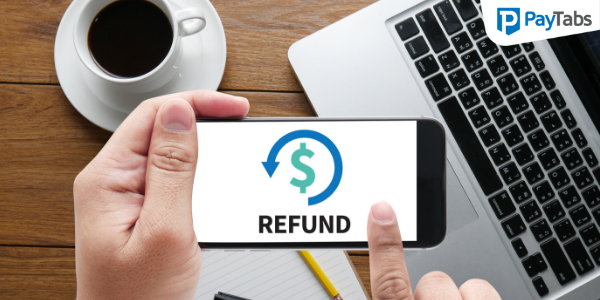
Why Do Refunds Take So Long?

Why Do Refunds Take So Long?

Online transactions have made life quite easy. We transfer funds, buy things and pay for them, receive payments, and all of this with the simple click of a button. Cash is rarely required anywhere. Online or cashless payments have become quite ordinary. The only time that online transactions frustrate us is when our money gets stuck! But like most out of the ordinary things, we must regard it as an exception.

Most online portals have simple refund policies. The process of raising a refund request is quite convenient; however, there are instances when the process is delayed due to some reason. In order to better understand this process, let us look at detailed insights.

When does the need for a refund arise?

  • When you make an online purchase and pay through your card but later decide to cancel or return the ordered item
  • When you are in the middle of making an online payment and you lose network connectivity

Why do payments fail?

  • Failure in communication – At some point in the payment making process, if there is a failure in communication after the customer has been charged, the customer can ask for a refund. This usually occurs in most cases due to network or connectivity issues and is a rather common occurrence.
  • Failure in a status update – Another reason for the failure of payments is the status of payment not getting updated. In such a case, even though the payment has been deducted, one or more of the banks involved fail to update the status. Since the payment gateway has no information, no information is available to the buyer or seller.

Why getting refunds takes time?

Firstly, the merchant usually needs a certain amount of time to determine whether the request for refund is legitimate or not. In cases where goods are returned, the merchant would like to make sure that the goods have not been damaged by the other party.

Secondly, the banks have a vested interest in keeping your money with them for as long as it is legally possible as they make interest off of that money. That is part of the reason why the bank charges your account immediately while delaying the refund to your account. In these cases, the merchant is able to provide the customer with an authorization code that can be used to hasten the refund process with the bank.

Thirdly, refunds take time because there are multiple online payment platforms involved. The process of authorization can be quite cumbersome. A slight delay at any stage further delays the entire process. To explain the refund process further, let’s take an example.

A customer raises the request for a refund. This request will be made to the payment gateway involved. The payment gateway then sends a request to the acquiring bank with which the merchant has an account. After the necessary approvals, the acquiring bank raises a request with the customer’s issuing bank. The entire process of authorization and re-authorization, despite the fact that no actual money is transacted, is a tedious one.

The bottom line

It is important to maintain your calm and understand how the process of refunds works. The movement of money in an online transaction, while faster, is sometimes hindered due to the complexity of the process. The entire process of online payments is monitored by the online payment gateway, the issuing bank, and the acquiring bank.

It is really up to the banks to approve and reflect the balance in their respective accounts. While no money is actually moving, the coordination between the two banks and the gateway determines the amount of time that the entire transaction takes.

PayTabs
Privacy Overview

This website uses cookies so that we can provide you with the best user experience possible. Cookie information is stored in your browser and performs functions such as recognising you when you return to our website and helping our team to understand which sections of the website you find most interesting and useful.