×

Multichannel Selling: The Right Move Forward or Too Many Things at the Same Time?(Part 1)

Multichannel Selling: The Right Move Forward or Too Many Things at the Same Time?(Part 1)

Multichannel Selling: The Right Move Forward or Too Many Things at the Same Time?(Part 1)

The more places your company and products exist online, the easier it is for someone to find you and buy from you. That sounds amazing, but it camouflages the sheer amount of work it takes to keep your channels running and profitable.

There’s a whole lot to discover for e-commerce and multichannel retail, and we want to look at where it can all go right or terribly wrong. So, we’ll review the triforce of multichannel efforts, some core concerns, and a few specific areas you must get right to understand if it’s all worth it for your specific company.

What Is E-commerce Multichannel Retail?

Multichannel sales have changed significantly since the term was first brought into the popular domain. It now covers more than just making products available to customers generally online and in-store. That early focus was often for brick-and-mortar stores expanding into the growing world of digital, which came with its own set of unique challenges as stores turned from large-scale shipping to locations to fulfillment direct to the consumer when a product is sold online.

The E-commerce space introduces further complexity — which, thankfully, software can now manage for most brands — of understanding demand and orders across a variety of online locations. Now, your multichannel efforts tend to consist of providing products on your website, through marketplaces like eBay and Amazon, on social channels such as Facebook and Twitter, and whatever comes next.

That next is often a result of search, such as how you can now order some products through virtual assistants. While they’re locked in closed gardens (buying only from Amazon, iTunes or the soon-to-be TV App, etc.), every such digital revolution we’ve seen has eventually opened up to include a variety of third-party sources.

So, your new multichannel e-commerce selling efforts are designed to distribute your products across as many apps, marketplaces, shopping and search engines, social, and other digital channels focused on letting customers browse and buy how they prefer.

Good news: Software can do much of this heavy lifting thanks to data standards, APIs, and integrations, so you’re not coding things yourself or having to update product availability for each channel manually. Payment is one area where you’ve got some genuinely savvy options.

Bad news: New channels are always emerging, and consumer trends often flow to new channels, so you’re always going to have a mix of staples and an ever-changing roster of newbies that require effort and thought to do well. For instance, Facebook’s own study shows young people are paying less attention to it now, especially when it comes to videos and video ads.

Tough news: The challenge is never going to go away, and channels will likely continue to grow. So, to capture your audience and then build loyalty, you’re going to need to be visible and buyable on the channels they use.

About the author

Jake Rheude is the Director of Marketing for Red Stag Fulfillment, an ecommerce fulfillment warehouse that was born out of ecommerce. He has years of experience in ecommerce and business development. In his free time, Jake enjoys reading about business and sharing his own experience with others.

Top Tips to Burst Payment Myths

Top Tips to Burst Payment Myths

Online payments are the mainstay of e-commerce. Without an efficient online payment system, the growth of any e-commerce business would be greatly compromised. While designing an online payment system for a business, it is important to not only offer a wide range of platforms, but also to ensure that such platforms are robust and secure. Since most of the e-commerce businesses operate across borders, it is also important that such transactions are legally allowed as per the rules and regulations of the concerned countries. Following are the top tips which let you design an optimal payment system for your e-business.

  • Low Upfront Costs: While online payment platforms are essential for any online business, these are also expensive to operate. While deciding upon the platforms and methods to be used, proper attention should be paid to the associated costs.

Generally, these costs are upfront costs and running costs. Apart from the one-time setup fee, these platforms charge a certain percentage of transaction amount as their operating fee. Therefore, it is important that both these costs are taken into cognizance while deciding upon the platforms to be used. Don’t fall into the trap where some online payment service providers offer low upfront costs. It is highly likely that the associated operating costs will be on the higher side.

  • Supporting Features: Another myth associated with online payment systems is that they are only required to have the ability to accept payments. However, in an ecommerce business, the online payment system is expected to perform many more activities such as accounting for refunds and cashbacks. Such transactions are commonplace in an online business and therefore, the payment platform should be equipped to undertake such operations. While deciding about a service provider, it should be thoroughly checked that they are ready to provide such supporting functions.


  • Scalability: While most of the service providers offer the ability to scale up the payment system as and when your business grows, it is imperative that you fully check the extent of the scalability provided. Generally, such offers are saddled with fine prints and hidden clauses which come with additional contracts, higher fees, and other costs. You need to ensure that such elevated costs come with corresponding benefits in terms of scalability. Further, it should also be verified that the scaled operations will provide the same level of efficiency and robustness as the original plan.


  • Security: Online payment systems are still considered to be unsafe, which negatively affects their acceptance by the customers. In order to ensure that your customers feel safe while carrying out transactions, it is vital that you fully understand the safety features provided by your online payment platform. Apart from vetting the existing safety measures, you should also look at the service provider’s ability to offer safeguards against potential threats. Online businesses face new security threats on a daily business, making it imperative that the online payments service providers are ready to face not only existing threats but also the future ones. Installing a robust payment system will help in alleviating customers’ concerns about the safety of their money and personal information.


  • Flexibility: Another myth related to online payment systems is their rigidity. In order to keep the systems secure, it is generally believed that such systems are difficult to change and customize. However, this is not true as most of the top online payment service providers offer customizations to meet different requirements. Some of the top customizations are related to the acceptance of different currencies and diverse credit cards and debit cards. It is also a good idea to see whether your service provider is future ready to deal with upcoming technologies such as cryptocurrencies, which have the potential to become a major part of payment systems.

While deciding on an online payment system for your e-business, it is important that you take time to separate facts from fiction. There are several myths related to online payment systems and these misconceptions can negatively impact your decision-making process. In order to ensure that you set up the most optimal payment system for your business, you should keep the above-mentioned points in mind.

The Rise of the Subscription Business Model

The Rise of the Subscription Business Model

Subscription business model is one of the most promising emerging models and involves charging the customers a recurring price at regular intervals. This model eliminates the need to make a large upfront payment for buying a product or service. While earlier this model was popular with print media and other specialized domains such as service providers, now more and more business segments are experimenting with subscription business model.

Subscription model is quite resilient and may be customized to meet the specific requirements of a business. While some models provide a fixed menu of products or services, others may offer unlimited use of their offerings for a fixed period of time. The flexibility of the model is one of the biggest reasons behind the success of this phenomenon. However, this is not the only advantage of this model. With a subscription business model, you can reap the following benefits:

  • Predictable Revenue Stream: The subscription model allows a business to make educated prediction about its future revenue and therefore is immensely helpful in planning and budgeting.
  • Customization: The subscription model is also conducive to customization of plans. You can design different types of subscription payment schemes to meet diverse demands of your customer base. Such customization also enables the business to attract new customers as they can get payment terms and conditions to suit their requirements.
  • Optimizing Costs: Since the subscription model allows businesses to predict their demand pattern, it becomes easier to design purchase plans in an efficient manner. Such planning enables the business to optimize their costs and processes.

Once you have decided that you want to turn your business into subscription-based enterprise, there are certain pointers you need to keep in mind. These points will help you in smooth transition and efficient execution.

  • The Right Pricing: Just like conventional revenue models, even subscription model requires the business to determine the right price point. Since your subscription plan will not only impact your current customer base but also the size of your potential market and future subscriptions, it is important that you pay proper attention to different factors such as the income level of your market and the likely demand to determine the price to be charged.
  • Simplify Billing: While it is important to have simple yet clear billing in any business model, the need for simple billing is all the more important in subscription-based models since the invoices are sent more frequently. The businesses should ensure that the bills provide all the details in a concise and clear manner. Reliable invoices help in creating transparent and strong processes, inculcating confidence in customers.
  • Develop Deeper Customer Relationships: Robust customer relationships form the base of the subscription model. As the customers grow, it is important that the quality of customer relationship processes is maintained and improved over a period of time. As the subscription model entails more frequent interactions with the clients, it is important that the business is sufficiently strong to take on the additional burden.
  • Measure and Iterate: The success of the subscription model largely depends on a business’s ability to measure the results and take swift actions to remedy the situation. As the model is still in the evolution phase, it allows for customization and quick changes. It is equally essential that the processes are scaled in response to the introduction of the model. Such a model may also require frequent changes as you may have to introduce more innovative plans to meet customers’ requirements.

The subscription model is here to stay as more and more verticals pick it up for boosting their customer base. While the model offers many advantages, it also has certain shortcomings such as customer fatigue, wherein, clients may grow weary of the same products and services. The model also requires the business to stick to scheduled deliveries with minimal deviation. If the supply side is unpredictable, it may not be possible for the business to maintain such delivery schedule for its customers. Overall, it is important to ensure that the subscription model is suitable for the business in question and that adequate attention is paid to different factors while designing this model for implementation.

Localize Your E-commerce Business to Grow Faster

Localize Your E-commerce Business to Grow Faster

E-commerce businesses come with the benefit of global reach; however, there is also the need to give a local touch to your enterprise so that customers from different countries to warm up to you. Localization is essential for ensuring that you are able to customize your offerings for different markets within your overall global market. At the rudimentary level, localization may entail providing different language options on your website. However, you can go beyond that to provide a unique touch to each market. Here are some of the strategies which may help you in localizing your e-commerce business.

Why Do You Need E-commerce Localization?

Several studies have shown that online consumers are more willing to buy a product if they are presented with all the necessary product information in their local language. However, merely changing the language does not do the trick as you also need to customize the content to suit local cultural norms. You should also pay attention to various nuances of a language. For example, the French spoken in Paris is vastly different from the French practiced in Francophile regions of Canada.

Localization is equally important for small businesses run online. Despite the size of the business, the owners still need to compete in the international markets as a vast majority of internet users hail from emerging economies such as India and China. The key to success for small online businesses is to optimize their local reach within the constraints of their limited budget.

Know the Local Rules

Chevrolet made a massive marketing mistake while promoting its Nova car in Latin America, where the word ‘No va’ literally translated to “it doesn’t go” in Spanish. So, it is important to ensure that when you localize your online business, you understand the common societal norms, regulations and customs. For this purpose, it is advisable to engage the services of localization specialists, who are familiar with the subtle characteristics of a market. These specialists have the expertise to help you localize your products and services to best meet the requirements of your target market.

Use Social Media the Right Way

The role of social media in promoting online businesses cannot be overemphasized. Similarly, you can also use social media to provide local touch to your e-commerce business. You can create different social media pages or identities for different markets. This segregation will allow you to generate localized content and connect with the prospective buyers in a more customized manner. Again, the hiring of localization specialists may come in handy to ensure that you get the right message across.

Pay Attention to Payment Gateways

The success of an online business depends on a variety of factors, including the ease of completing the transaction. One way to ensure a pleasant online shopping experience is to offer appropriate payment gateways to the buyers. So, when you list down your product or services on your website, take some time to ensure that the prospective buyers are quoted the prices in their local currencies. The use of local currency will help the consumer in making a more informed decision, ultimately earning you their loyalty. Also provide different online payment platforms to suit the current cultural and commercial environment. For example, different international websites have offered payment services like Cash on Delivery in emerging economies such as India, where the use of credit or debit cards is still in a nascent stage.

Strengthen Brand Loyalty

In order to win long term business from your target market, it is imperative to create a unique brand and command loyalty from your followers. There are several ways in which a business can build sustainable customer base. You can focus on providing user generated localized content as it may help you in building credibility. Studies have shown that online customers rely upon the feedback provided by their peers on the internet. Such feedback is even more potent when it is delivered in the localized context. Another strategy to create local brand loyalty is to diversify your products and services. For example, you can expand the menu to include local delicacies or modify your recipe to suit local palate.

Localizing end to end experience for your customer base may seem time consuming and resource intensive. However, the strategy has long term implications and may help you in creating a long lasting cross border online business.

All about STC Pay

All about STC Pay

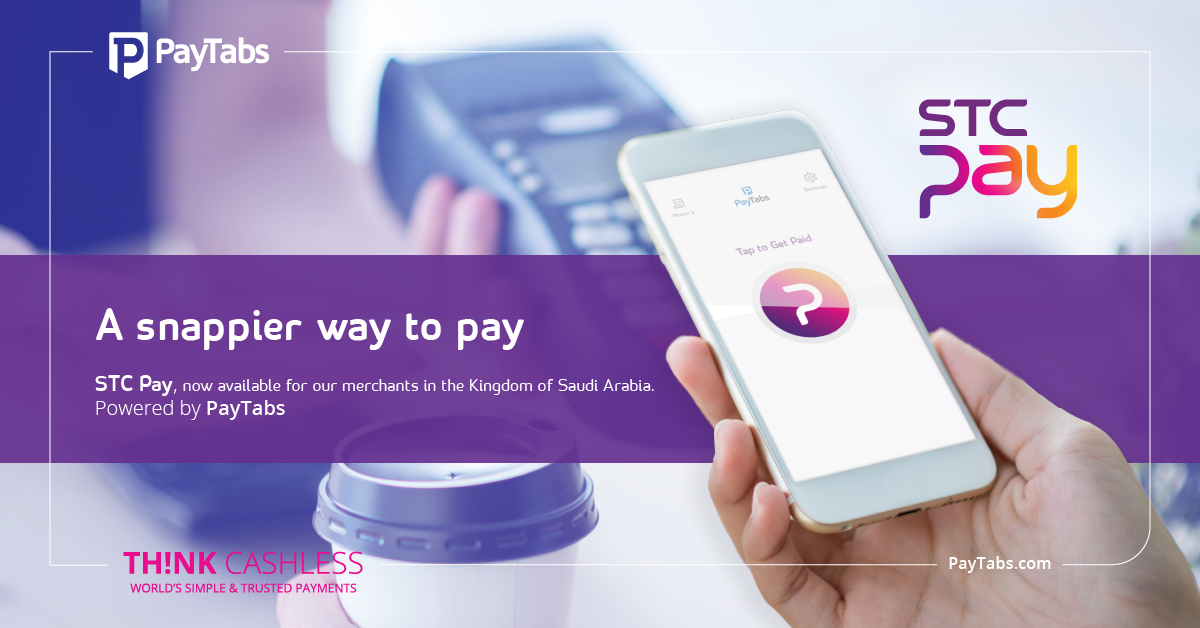
Currently, the e-commerce landscape is exhibiting a lot of dynamism, with businesses of all sizes going online to reach out to countless potential customers locally and globally. However, the success of any e-commerce venture is intimately linked to a couple of key factors, and an online payment management system is one of them. The online payment system you choose should not only be easy to use but also secure at the same time. To fulfill these requirements in an efficient manner, PayTabs has introduced STC Pay, which is a digital secure wallet and it lets individuals have more control over their money.

Why STC Pay?

PayTabs’ collaboration with STC Pay ensures that we are bringing the latest and the best in online payment systems to our clients. STC Pay offers a wide range of services including easy activation, better transaction transparency and instant refund. It also allows you to carry out your financial operations such as sending, receiving and managing your money through its dedicated phone app, ensuring that you are productive even when you are on the go.

STC Pay system is designed to pay for purchases, whether you have bought a candy bar in a convenience shop or a diamond necklace from a glitzy mall. You can use this app to clear your STC bills with just a flick of your finger. The system caters to the needs of busy people as it allows you to make international remittances as well. With this system you can make instant fund transfer to more than 525,000 Western Union locations globally.

STC Pay Powered by PayTabs

With PayTabs, a merchant can apply for an STC Pay account. After proper verification of the documents provided along with the application, the account gets activated and the merchant is able to receive cash from online channels. Currently, PayTabs offers STC Pay facility to only those Saudi merchants who have a proper Saudi bank account and CR. Furthermore, only Saudi individuals with a Saudi mobile number are eligible for making payments using this platform. These features are in line with PayTabs’ strategy to focus on Saudi businesses and propel them towards a high growth trajectory.

The merchants may use any bank to be associated with their STC Pay account as it does not require any specific bank for transactions. STC Pay provides support for various modes of payments for loading the digital wallet. The end client may use any of the major credit cards such as MasterCard, Visa and Amex or debit cards such as mada, to add money to their digital wallet or through IBAN and SADAD transfers.

Grow with PayTabs

PayTabs aims to provide a convenient and secure channel for remitting and receiving payments. Within a short period of time, the company has established itself in the online payment segment. Its tailor made solutions for businesses ranging from small enterprises to mega corporations are reliable and efficient. The company is also at the forefront of electronic payments with its emphasis on developing technologies and partnerships. PayTabs’ security management layers are certified by Visa and MasterCard, offering you absolute peace of mind.

PayTabs
Privacy Overview

This website uses cookies so that we can provide you with the best user experience possible. Cookie information is stored in your browser and performs functions such as recognising you when you return to our website and helping our team to understand which sections of the website you find most interesting and useful.