×

How Offering Alternate Payment Methods Provides a Competitive Edge

Category: Growth Hacks

How Offering Alternate Payment Methods Provides a Competitive Edge

How Offering Alternate Payment Methods Provides a Competitive Edge

With e-commerce gradually taking centre stage, online shopping is emerging to be a highly competitive space. Every merchant is keen to include differentiating factors based on customer convenience and choice to stand out from competition. One such feature is offering alternate payment methods to the customer. We shall look at how offering alternative payment methods can help one stay ahead of one’s business rivals.

  1. Let the customer choose: Just like with products, customers like to be presented with choice when it comes to payment methods. For a global e-commerce business, it is important to identify the locally preferred, accepted payment methods. This option varies among different geographies, regions, industries, age groups, and devices i.e. smartphone, tablet or laptop used to make the purchase. For example, it is not practical to enter card details in a mobile. In such a case, digital wallets might be popular. In another study, it has been found that millennials prefer text to talk in case of payment methods.
  2. Adapt to local tastes: There are several e-commerce payment options available like direct bank transfers, direct debit, digital wallets, cash on delivery, phone and mobile payments, prepaid cards, money order, online invoices, digital currencies and specific local payment modes. A payment solutions company with a global network would be able to provide valuable insight about the most commonly used payment option. The data analytics would enable higher sales conversion.
  3. Fraud risk evaluation: One can use digital solutions that provide real-time information on the most suitable payment method to be provided to a shopper, after an automated background verification of customer credentials. The shopper’s delivery address, device location and other specific data can be used to assess the risk profile by the time the customer reaches the payment page. This offers dual advantages of providing appropriate payment methods as well as reducing incidents of fraud.
  4. Customer recognition: It is best to provide customized payment options of at least 3 modes. This can be determined based on the past purchase trends like value, frequency and the use of a particular payment mode. This would help provide seamless payment processing based on intuitive data.
  5. Multi-currency support: It is best to opt for online payment platforms that support multiple currencies or provide an accurate currency conversion option. Often, a customer might be travelling internationally and would need to make a purchase from an e-commerce merchant. In such a case, a payment gateway that offers payment acceptance across payment modes in multiple currencies can be a huge advantage.
  6. Secure payment processing: To win the trust of the customer, it is vital to provide secure payment solutions that comply with the highest security standards. Only then would the customer be willing to save confidential details of payment modes like credit card or debit card on the e-commerce website. This saves time during the checkout process as the details will be pre-filled. Some modes like EMV chips can negate any scope for credit card fraud.
  7. Enhance value: One could offer frequent customers the option to pay with reward points or loyalty cards. Co-branded cards that offer rewards like discounts, etc would encourage higher spending with certain merchants. Certain digital wallets also enable the storage of ID cards issued by Government authorities.

Technology is redefining the way we think about payment modes. Gone are the days when one had limited options of cash, cards and net banking. A whole plethora of alternative payment methods are available to cater to the preferences of every wallet, demography, market and business type. A one-size-fits-all approach would prove counterproductive and might result in losing out valuable business to the competition. One needs to find the right payment mix that works best for the unique needs of each business segment and customer profile.

PayTabs embraces a data-driven strategy with KPI dashboards

PayTabs is a Saudi-based company that facilitates processing of online payments securely and efficiently, founded by Saudi entrepreneur Abdulaziz Al Jouf.

PayTabs caters to small, medium, and large enterprises via different business models. PayTabs offers their clients services allowing them to seamlessly ‘plug and play’ various features onto their websites. They pride themselves on offering simple and efficient invoicing services for merchants and professionals.

PayTabs was awarded the title of ‘Fintech Company of the Year 2018’ at the prestigious Arabian Business Achievement Awards. With dedicated offices in Saudi Arabia, UAE, and presence in Bahrain, India, and the Philippines, PayTabs is fast emerging as the preferred payment solution company.

Meet Monita…

Monita Pesumal is the PR, Events, and Communications Manager at PayTabs. It’s her job to handle public relations, media, corporate communications, branding, events, and manage the marketing team at PayTabs.

Tracking and observing company health

PayTabs embraces a data-driven strategy with KPI dashboards

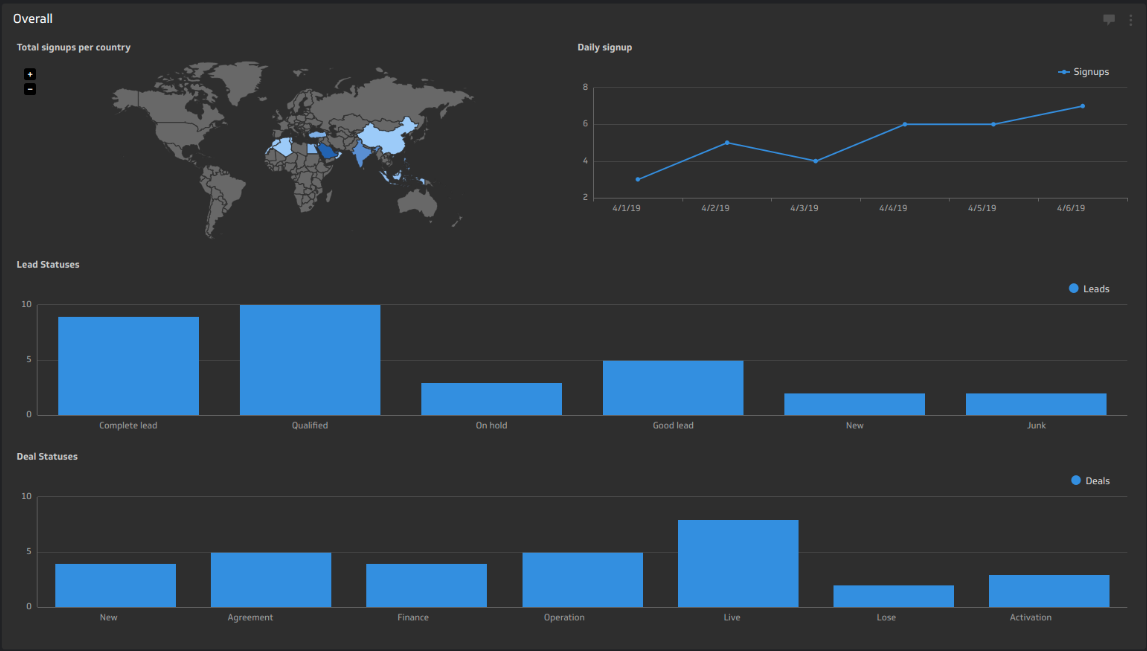
*Image is for illustrative purpose only – not actual company data

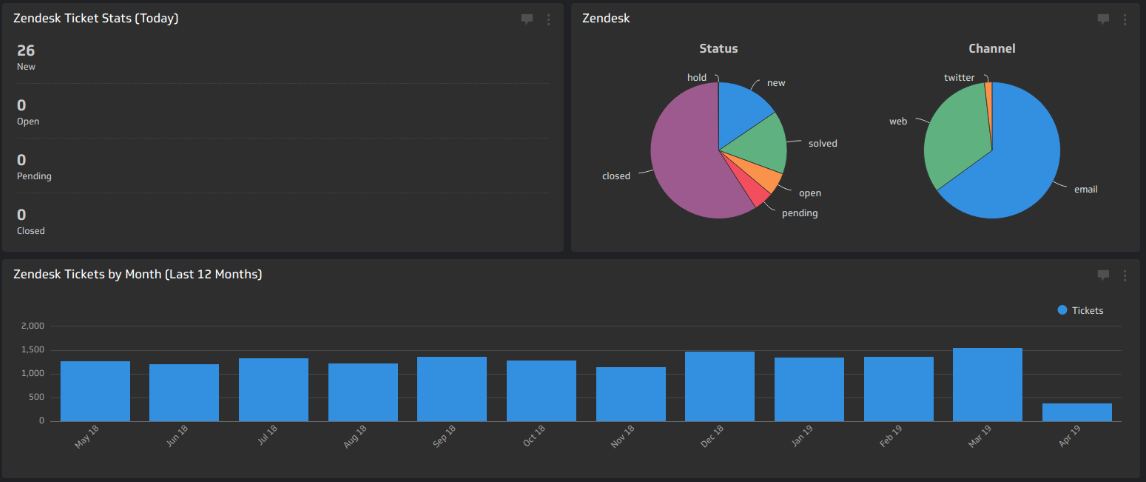
PayTabs offers a smart dashboard to help their customers manage monitor their online business metrics as a part of their service suite. Before trying Klipfolio, PayTabs were using their own dashboard software to monitor the health of their company. However, they weren’t getting enough out of this approach and needed a more flexible and powerful dashboard solution.

“We had an analytics tool baked into our offering which was limited and we didn’t have the resources to build a full-blown analytics tool needed for the job. Building an all-in-one, in-house dashboard system would have been too time consuming for our existing team.”

The PayTabs team decided to work with Klifpolio mainly because of its robust variety of data source quick connectors and sophistocated API capabilities that support connection to their HRM and CRM services.

“Being able to customize our Klipfolio dashboards according to our requirements was a major plus!”

The team was able to get up and running with Klipfolio quickly and easily once they commited.

The ‘KPI Trifecta’: sales metrics, support metrics, and financial metrics

PayTabs embraces a data-driven strategy with KPI dashboards

*Image is for illustrative purpose only – not actual company data

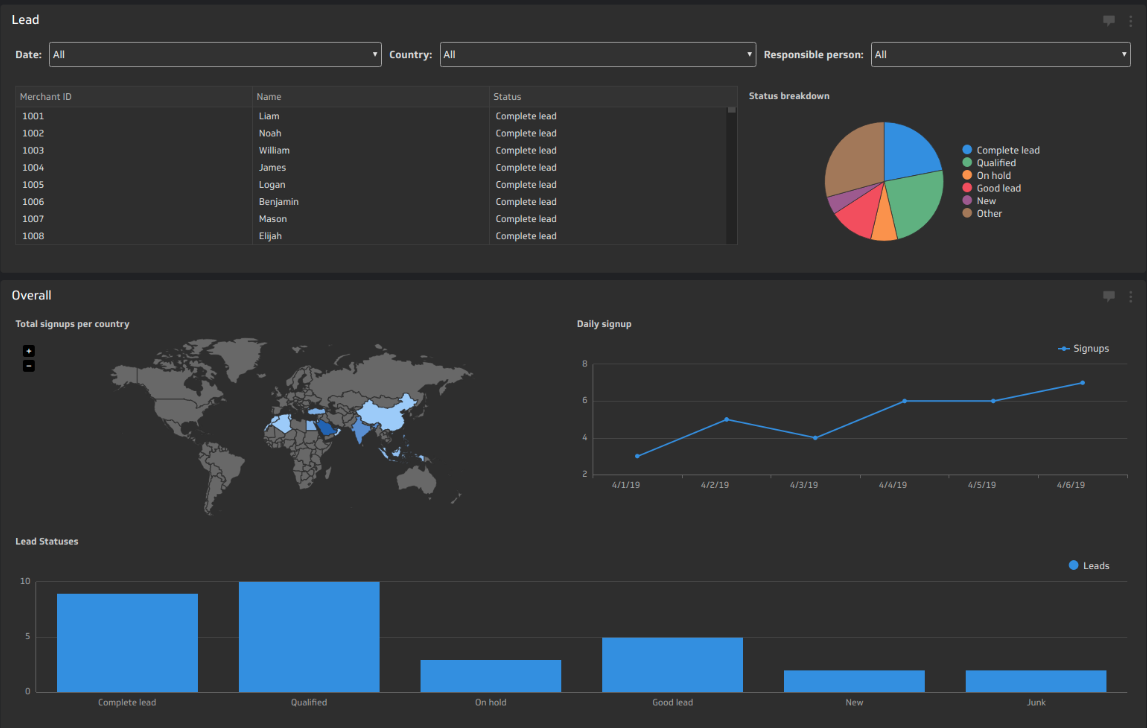
PayTabs uses Klipfolio for tracking their company-wide KPIs. This is possible because Klipfolio allows you to connect to multiple data-source, mash them up, and have the information displayed all in one visualization.

“We’ve built Klipfolio dashboards for every department to help identify and analyze data relevant to them in addition to generating regular reports.”

*Image is for illustrative purpose only – not actual company data

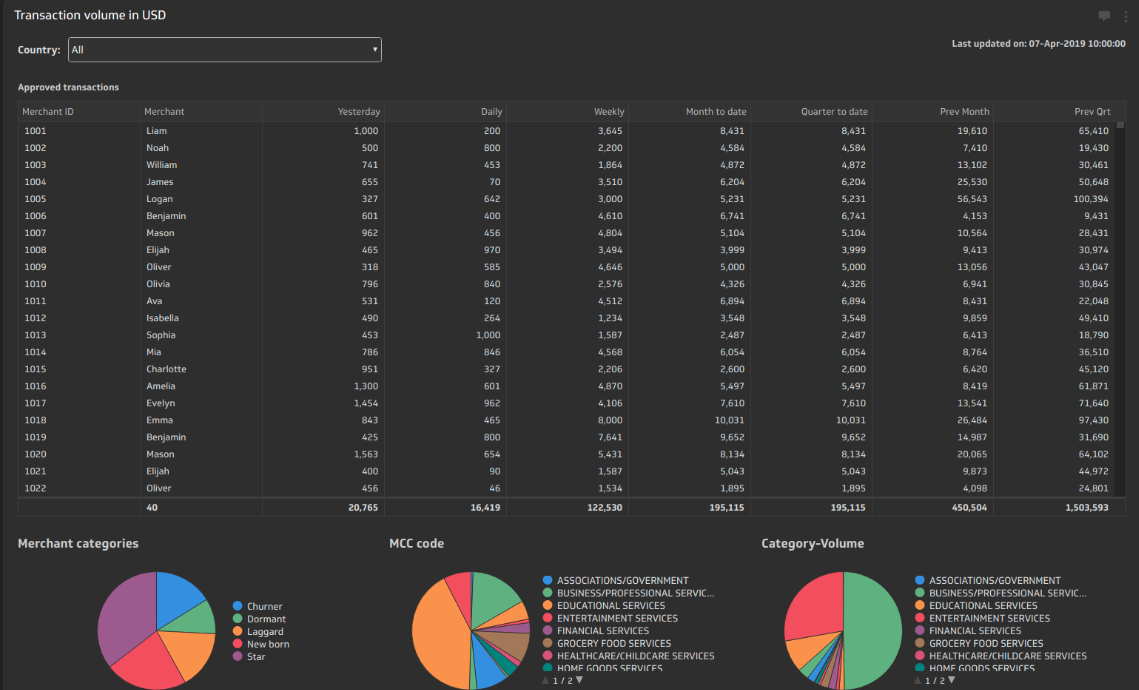
The team has done a great job at defining their goals and targets, and they lean on their dashboards to observe and track how well their KPIs are doing against target on a daily basis.

The effectiveness and selection of each KPI should always depend on the business and marketing/sales/finance/HR models in place. Defining organizational KPIs. has been a real game changer for PayTabs.

Their KPIs are all likely to change as they gather new insights into the market and/or their offering, which means assessments are done both at the company and departmental levels.

PayTabs embraces a data-driven strategy with KPI dashboards

*Image is for illustrative purpose only – not actual company data

Overall, PayTabs is quite pleased with their Klipfolio dashboards.

“We love that Klipfolio is highly customizable, easy to integrate, and user friendly. What’s great is you don’t need to be a developer to use Klipfolio, almost anyone can build Klips.”

A big corporate culture done right

PayTabs is an equal opportunity employer. The company has over 20 nationalities represented in their office including Saudi Arabia, Bahrain, Philippines, Germany, UK, India, and Sri Lanka.

Like diversity, gender equality is also valued within the firm as they have an equal ratio of male to female employees. Some of the employees have been with the firm since its inception.

Employees at PayTabs say that the atmosphere has a ‘chilled and funky vibe’ with open floor plan offices, bean bags, a café, and a host of fun and engaging monthly activities that contribute to the positive work vibe.

Monita has some closing advice for anyone on the fence about taking a more data-driven approach to business:

“Take the plunge. Data is the new black.”

Source

5 Common Mistakes in Online Payment Systems That Can Kill Your Conversion

5 Common Mistakes in Online Payment Systems That Can Kill Your Conversion

Many online merchants lose significant revenues because of online payment mistakes. It is high time that these e-commerce mistakes are rectified, or else e-stores will keep facing repeated incidents of abandoned carts and incomplete purchases by customers. Some of the oft-ignored e-commerce mistakes committed by online merchants are:

  1. Redirection can be counterproductive: Some merchants get it completely wrong when it comes to the gateway for online payment. They redirect the customers to an external payment website with payment gateway charges and a different company logo. This is a big put off for many customers, who might abandon the transactions as they have security concerns about the new portal or might not be willing to pay additional charges. It is always best to have a single website where a customer can smoothly navigate through till the end of the transaction and the checkout process. This would result in higher chances of the purchase transaction being completed and reduce the loss of customers to competition.
  2. Mandating account creation: This might work counterproductively, especially in the case of first-time customers or customers who intend to purchase a small quantity of products. Creating an account involves time and prolongs the entire purchase process. This could result in customer frustration and even possible withdrawal by the customer before completion of the transaction. It is advisable to provide the option of buying as a guest user. Post the purchase, one can subtly encourage the customers to create an account through offers of promotional discounts or price benefits by email or SMS. Customers prefer shopping on e-commerce sites where they can exercise their choice.
  3. Expecting excess information: The transition to the payment gateway should be smooth for the customer to make the online payment and be able to close the transaction with minimum lag time. Asking for additional information with extra fields would delay the buying process. It may also increase chances of error while filling out the form, causing unnecessary frustration and might result in abandonment of the transaction. A good user experience on the e-commerce website can result in higher sales conversions and higher probability of return customers. It is prudent to have auto-fill options for forms that only ask for information relevant to successful payment, namely card number, name of the cardholder, expiry date and CVV. In the case of a website with a multi-step checkout process, it is recommended to have a progress indicator so that the customer is aware of the remaining steps before the transaction is completed.
  4. Assurance on security: This is critical in every digital transaction. With growing incidents of data breach and leak of confidential information, every customer would like to be reassured on the safety aspect of the online purchase. Thus, it is imperative to have secure online payment systems wherein the customers’ card data remains secure. It would be useful to indicate that the website follows the regulatory framework prescribed for data security and encryption standards. This includes security badges, the merchant logo prominently displayed on every webpage, SSL certification and PCI compliant payment gateway.
  5. Absence of customer support: Many times, the customer is unable to proceed with the payment or faces a problem completing the online payment. In such instances, it can be extremely frustrating for the customer if he can obtain no assistance or response on the toll-free number. Immediate support with 24*7 availability should readily address the customer issues and resolve the problem. Provision of timely help to the customer works as a strong customer retention strategy.

Don’t shoot yourself in the foot and kill conversion with these e-commerce mistakes. Following the above mentioned measures to correct them would result in better user experience for the online customer and higher sales conversion for the e-commerce merchant, truly a win-win situation for both.

How to retrieve your money from a not-so friendly fraud

How to retrieve your money from a not-so friendly fraud

A friendly fraud is probably a misnomer. In reality, it can be a harrowing experience for the merchant, who completed the transaction. Friendly fraud occurs when a cardholder files a chargeback instead of requesting a refund from the merchant for a legitimate purchase. It can be filed by mistake by the customer or even intentionally in some cases. While such incidents of disputed transactions are on the rise with the predominance of digital transactions, the following are the ways in which the merchant can mitigate the risks:

  1. Switch to a fool proof secure payment solution: It would be prudent to adopt a secure payment processor, which offers a comprehensive, multi-level risk protection to detect any fraud incidents or outliers and red flags the issue in a timely manner. Incorporation of verification tools like fingerprint, facial or retina recognition to work on mobile applications would also go a long way to prevent fraud risks.
  2. Adopt a 3D Secure authentication: Under this online payment platform, the customer’s card is promptly validated by the issuing bank, prior to the transaction. Thus, it’s extremely difficult for the customer to later claim any unauthorized charges. Some merchants are reluctant to adopt this approach owing to the fear of reduced sales conversion or cancellation of the transaction due to the customer being kept waiting for the bank confirmation.
  3. Keep the communication channels open: It is advisable to offer 24*7 support to customers for post sales services. A good business rapport would help clear any potential differences or misunderstanding with the customer. The merchant could also negotiate a lower chargeback charge or its cancellation by the customer and reduce potential monetary losses. One should also regularly apprise the customer before charging for recurring payments.
  4. Establish a solid return policy and delivery tracking mechanism: It is a good practice to make the customer aware in prior of the return, cancellation and refund policies. This would reduce the chances of chargeback filed by mistake. The merchant could also have a software to track the delivery status of the product, with a signed customer confirmation upon receipt of the product by customer at the shipping address.
  5. Maintain adequate data trail: Documentary evidence is key when it comes to validation of online transactions. This should ideally capture details of product description, agreed pricing and the date of transaction. This is vital as in many cases the chargeback is claimed on frivolous or false grounds like non-delivery of the products, delivery of counterfeit or wrong items, non-cancellation of recurring charges by the merchant inspite of customer requests and the original transaction was unauthorized in the first place. Hence the need for retention of sufficient papers to support the online transaction.
  6. Distinguish between accidental and intentional fraud: This identification is crucial. While the former can be settled by talks with the customer, the latter, being malicious in intent is a different ball game. The merchant is not in a very advantageous position as far as the law goes with limited power to get the chargeback reversed. Similar to a ‘guilty until proven innocent’ situation. This is because in most cases, it is likely that the bank would side with the customer than the merchant.

To conclude, in case one does land in the soup and has to face monetary losses from chargeback charges, loss of shipping costs and transaction processing fees, it is best to hold one’s ground. In case, the quantum of money is huge, it is best to get professional, legal advice. Further, repeat transactions with such errant customers should be absolutely avoided as the adage goes “once bitten, twice shy.”

How Technology Has Made The Online Shopping Experience More Enjoyable?

How Technology Has Made The Online Shopping Experience More Enjoyable?

If shopping without walking a few miles has become possible, it is because of technology. Over the last few years, the e-commerce industry has reached a whole new level and it is growing consistently. Undoubtedly, if the technology had not advanced, the easy online shopping experience you see nowadays wouldn’t have been possible.

Thanks to a variety of avant-garde software and applications, online businesses are being able to reach customers globally and boost their sales. Similarly, shoppers are benefiting by saving their time and energy which they would have otherwise wasted on visiting physical stores. Plus, technology has made online payments smooth, simple and safe, thereby encouraging more businesses and customers to go online.

How is technology benefiting online shoppers?

  • Chatbots to guide you

Technology has made it possible for businesses to handle their online customers easily. This means, customers get proper assistance and guidance when they are browsing products or deciding to buy one.

For example, with the help of advanced technology, an e-commerce store can get customers’ queries resolved and can accept payments online, free. So, if you are an online shopper, chatbots can clear your doubts, provide information about the product you have in mind or help you navigate to the right website page etc.

Moving forward, let’s dive into the points which genuinely explain how technology has leveled up the game of online shopping experience.

  • Mobile-friendliness is a big plus

Do you find it annoying to get on the laptop for every single detail? Well, this is where the invention of mobile phones comes into the picture. Most online shoppers find it convenient to browse on their phones and actually spend their time to search for the products they are planning to buy. This has actually made the procedure of buying good products very easy. Also, with the help of secure online payment systems for mobile phones, the online shopping experience has become very convenient.

  • Hey Siri – What Is the Role of Technology?

With the help of technology, buying clothes, footwear, food and anything you want has become much easier. And now, if you don’t even feel like scrolling on your phone, just say “Hey, Siri!” or “Hey, Google!”, and your virtual assistant is going to solve all your queries.

It’s up to you whether you want to appreciate technology for making life much easier or blame it for making you lazier? You decide!

  • Secure payment is a reality

Online shoppers can now rest assured about the safety of their online transactions. Modern payment gateways adopted by trusted websites have many anti-fraud measures in place so that your sensitive information doesn’t get stolen or compromised. Moreover, with such gateways, you will be able to pay using various modes like card, net banking or mobile wallet. So, essentially, technology is making it possible for you to pay for your order in the most convenient way.

  • Express checkout

You might be aware of how frustrating it feels when it takes a lot of time to get your payment processed at the checkout. Good news is that improvement in online payment technology has made express checkout possible, where shoppers won’t be redirected to a different page when they are paying for an order. The payment gets processed very quickly, whether you are shopping from your laptop or mobile.

Conclusion:

No doubt, technology plays a very important role in easing the online shopping experience. Whether it’s about a mobile-friendly interface, secure online payment mechanism, or helpful chatbots, shoppers can now make the most of technological advancements to make their shopping experience enjoyable and smooth.

PayTabs
Privacy Overview

This website uses cookies so that we can provide you with the best user experience possible. Cookie information is stored in your browser and performs functions such as recognising you when you return to our website and helping our team to understand which sections of the website you find most interesting and useful.