×

10 Tips for Turning One-Time Shoppers into Loyal Customers and Help Boost Your Sales

Category: Customer Experience

10 Tips for Turning One-Time Shoppers into Loyal Customers and Help Boost Your Sales

Any business thrives on its loyal customers. Most big ecommerce brands attempt some kind of loyalty program that keeps people coming back. Nearly every B2B company has a small number of key accounts bringing in most of the revenue. 

If you don’t have that stable of repeat buyers, you’re missing out. Not only do you lack that consistent source of revenue, but it might also suggest you’re not doing enough to earn those loyal customers.

Work from home platforms have changed the world and people are shopping online more than ever, too. This is a great time to be in ecommerce. With people more willing to buy online, customer acquisition costs should be falling. When you know how to turn those first-time buyers into brand evangelists, the opportunity is huge.

But how can you do that? Let’s go over ten tips you can use to turn first-time buyers into loyal customers.
10 Tips for Turning One-Time Shoppers into Loyal Customers and Help Boost Your SalesImage source

What is customer loyalty?

We should make a distinction between “repeat buyers” and “loyal customers”. Repeat buyers will come back to you again and again when you announce new products or seasonal offers –  you have their number and you don’t need to sell them hard on new campaigns.

Loyal customers are fully-engaged brand evangelists. They splashed out on a Peak Design backpack once and now they wouldn’t consider anyone else’s. They won’t buy a computer that doesn’t have an apple on it. In a B2B context, these would be the key accounts that the sales team knows on a first-name basis.

Not only are these the most financially valuable customers, but they’re also the core audience which the business should work to serve. What’s good for your most engaged customers, is good for the rest of them, and what’s good for them is good for the business. Listen closely to your most loyal customers, and you can’t go wrong.

You’d be lucky to turn even a small proportion of your customers into loyal customers. However, the benefit of trying to convert as many people as you can is that these loyal customers can become brand evangelists who’ll do your marketing for you. If they spend a lifetime recommending your product to everyone they talk to, your customer acquisition costs trend a little bit closer to zero.

With some simple incentives and easy-to-use referral tracking software, you can encourage and reward brand evangelists without the work of running a whole affiliate program.

How, though, do you inspire loyalty from one-time shoppers? Here’s ten top tips:

1. Use email

Most ecommerce companies are collecting customer emails to send receipts and to get in contact if something goes wrong in the shipping process. But how many of those companies are using that email to build a relationship with those customers?

Many companies don’t go beyond simple, transactional emails with titles like “Get 10% off now”. Consider how you could email more “brand marketing” content like short blogs or articles on the way you do things, and what makes you different from your competitors.

Think about what a dedicated email flow for that would look like – how you should introduce yourself to first-time buyers once they’ve ordered, and what you think they need to know about who you are. You can iterate and A/B test that flow until you get it exactly right, just like any other marketing effort.

You can also weave your brand story into those transactional emails. If you add a little bit of that messaging into your order confirmation email, customers will be seeing it every time they buy from you.

2. Create great experiences

People aren’t going to become loyal customers unless you provide a great experience. It’s why Apple put so much effort into their Apple Stores, from the staff who are paid to focus on educating customers rather than selling, to the cash registers and cables hidden inside the tables.

For an online store, creating a great experience means conducting a mobile usability test on all platforms like iOS, Android, etc. If you want to turn a first-time buyer into a loyal customer, you have to make sure everyone’s first impression of your site is flawless.

And it doesn’t stop there. When your customer gets their package delivered, make sure this is a great experience too. Sending your products in nice, branded packaging is just the start. Think about the whole experience.

Make sure you’re providing any helpful information the customer might need. Track the delivery and as soon as they receive it, send them an email or SMS with a friendly message and a link to useful pages on your site.10 Tips for Turning One-Time Shoppers into Loyal Customers and Help Boost Your Sales

Image source

3. Offer discounts

Discounts are a tried and true tactic for boosting sales in ecommerce. It’s also very easy to personalize those discounts to specific customers. Every positive interaction a buyer has with your brand is an opportunity to turn them into a repeat customer, so you want to encourage as many of those interactions as possible.

4. Be proactive

Proactively following up with customers is a big part of customer care. If you wait until there’s a problem and the customer comes to you, then their only interactions with you will be when there’s something wrong. Over time, that builds up negative associations with you and your brand.

When your customer receives a tracked delivery, you could send them an email a few days later asking how the product is and if they have any comments or questions.

As well as building relationships with customers, this is a great way to gather data you can use to improve your product or service. More simply, it’s a great way to catch a product issue or computer bug that you might not notice in QA.

5. Exceed expectations

From internet service to energy providers, people are used to a poor level of customer service, especially over the phone. By exceeding expectations in every interaction, from your online store to customer service, you can surprise and delight users whether it’s via a customer support chat or in a virtual healthcare waiting room.

6. Use a loyalty program

A customer loyalty program won’t turn visitors into brand evangelists, but it can turn one-time buyers into repeat customers. That repeated exposure to your company gives you more opportunities to build up brand recognition and turn repeat buyers into loyal customers.

You can also use the loyalty program to offer a more personalized service. This could take the form of discounts on customers’ birthdays or other personalized offers based on their buying activity.

7. Use retargeting ads

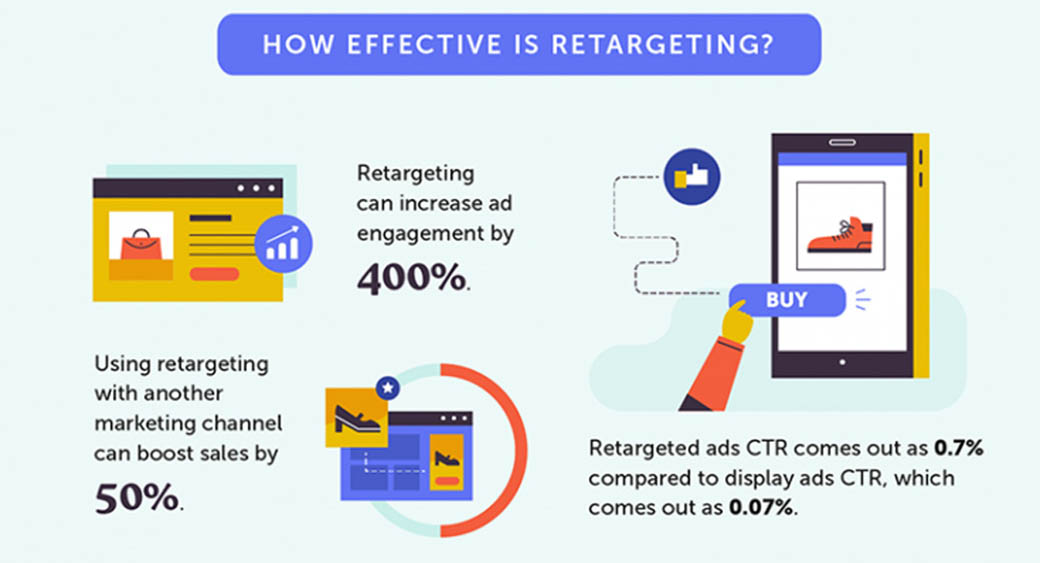
Retail is a seasonal business, and for ecommerce stores, there’s a lot of value in turning seasonal buyers into repeat customers. Retargeted ads on social media can follow those users around Facebook and Instagram based on what they’ve done in your app, allowing you to get them back onto your site for a second or third time. Retargeting reduces the cart abandonment rate by 6.5% and can increase online sales by up to 20%.
10 Tips for Turning One-Time Shoppers into Loyal Customers and Help Boost Your Sales

Image source

8. Leverage seasonal marketing

When you do have a seasonal peak, one with an influx of new customers, it’s an opportunity to turn people into repeat customers. Seasonal marketing strategies like limited-time discounts and special offers for your loyalty program can help make repeat buyers of people who have bought from you before.

You can think of your first-time-buyer-to-loyal-customer pipeline like any other marketing funnel. Once you have your “bottom of the funnel” activities figured out, you can focus your seasonal marketing on attracting new first-time buyers knowing you’ll convert a number of them to repeat buyers in the future.

9. Use data

To turn your one-time buyers into loyal customers, you need to understand them. And you can’t understand your customers at scale without good data.

One of the reasons why a mobile app is a must have for small businesses is that you can collect more detailed data on the way customers interact with you.

Whether you’re an ecommerce giant or a small coffee chain collecting people’s favorite orders, even a relatively simple app can give you valuable data while improving the customer experience.10 Tips for Turning One-Time Shoppers into Loyal Customers and Help Boost Your Sales

Image source

10. Make it personal

Personalization is one of the most powerful ways you can create memorable experiences for your customers, with 90% of consumers surveyed finding marketing personalization appealing.

One of the advantages of an ecommerce mobile app for your online store is that you can offer a high degree of personalization, from recommended products to push notifications on offers you know they’ll be interested in.

Personalized experiences could be as simple as recommending products you think they’d like. You can also use your marketing emails or mobile app notifications to send them offers you think they’d like at the time they’re most likely to buy.

Using the customer loyalty funnel to boost sales

With a combination of some of these ten tips, you can start to turn more of your one-time buyers into loyal customers. Just like any other marketing funnel you can learn from your successes, double down on what works, and use this knowledge to boost your sales in the long run.

Matt CooperMatthew Cooper – Marketing Automation & Operations Manager, Global App Testing
Matthew Cooper is the Marketing Automation & Operations Manager at Global App Testing, a best-in-class software testing company that has helped top apps such as Facebook, Google, Microsoft, and Craigslist deliver high-quality software at speed all over the world. Matthew has over 14 years of experience in the I.T Networking, Software & Services Industries. He is highly skilled in Search Engine Optimization (SEO), Content Marketing, Digital Advertising, Social Media Management, WordPress, Email Marketing, Marketing Automation, CRM, and People Management. You can find him on LinkedIn. He has also written content for DZone and BigCommerce.

How to Calculate Customer Acquisition Cost And Minimize Expenses

We all know the old saying: ‘if you want to make money, you need to spend money’. This may be true, but it isn’t always clear just how much money we need to spend, especially when it comes to customer acquisition. 

Customer acquisition is a crucial process for any business, and with the multitude of marketing techniques utilized by companies today, it’s one that is becoming more and more complex. To generate outbound leads most companies will run several campaigns at once.

All of this comes at a considerable cost, and with such high budgets it’s vital that spending is balanced out by paying customers. But how can we ensure this? How can we reduce risk?

Luckily, we live in the age of data and there are some incredible tools capable of simplifying this process. But, before you can start using them you need to understand: what exactly is customer acquisition cost?

How to Calculate Customer Acquisition Cost And Minimize Expenses
Image Source

What is CAC?

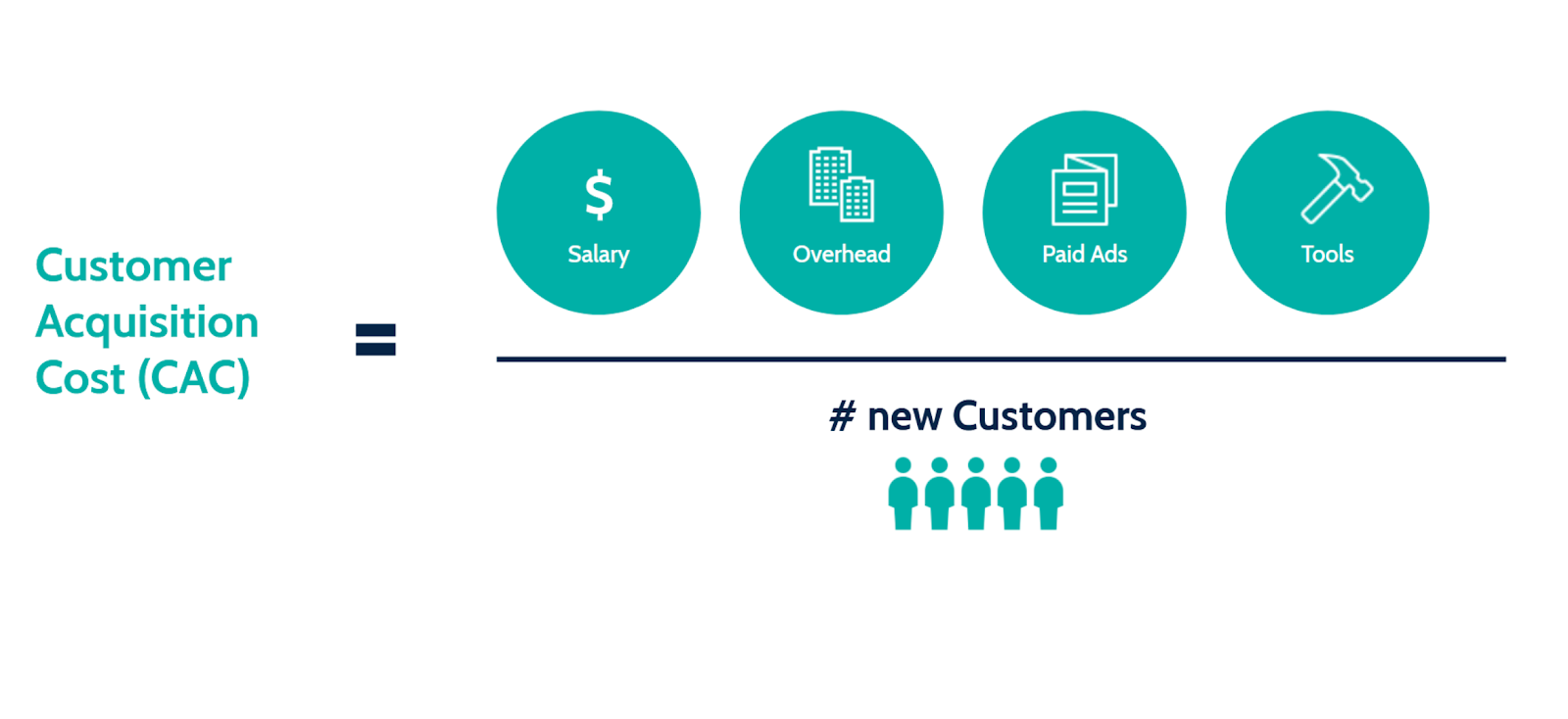
Customer Acquisition Cost (CAC) is a metric used by businesses to calculate the investment required to bring in new customers. It takes into account your total spending over a set period of time and compares that to the actual number of new customers acquired, eventually giving you the average amount spent on acquiring one new customer. 

The top companies get even more specific than that, running this technique across all of their marketing methods individually. This allows them to compare the cost of each and show which is most profitable, fine tuning their marketing strategies and driving profit.

How to calculate CAC

​Now it’s time for some math! But don’t be afraid, calculating your acquisition cost is actually very simple. All you need to do is add up all of your spending in marketing and sales over a certain time period. Then you divide that number by the amount of new customers gained over that time.

For example, if you spend 2,000dh and you acquire 500 new customers your CAC sum would look like this: 

2,000 / 500 = 4dh per new customer. 

That’s it! Obviously these figures will differ greatly depending on the size of your company and what you are selling, but this gives you a good idea of how the formula works and how powerful a tool it can be for companies.

What to include when calculating CAC

When calculating your CAC there are several categories of spending that you must take into account. The more specific you get, the more accurate your CAC formula will be. This may be the most time consuming part of calculating your CAC, especially for larger companies. Here is a short list to help you get started:

Advertising spend

Social media ads, email campaigns, pay per click ads, affiliate marketing, paid influencers – whatever method of advertising you are using, it all needs to be included.

Salaries

This will include all sales and customer service staff and the marketing team. Don’t forget warehouse staff and distribution costs if you’re selling a physical product – obviously this will depend on the company. 

Technical costs

This covers any technology that your marketing and sales team is using. Don’t forget to include software or services such as: POS (point of sale) systems, sales reporting software, marketing automation software, customer service satisfaction surveys.

Content production costs

This includes anything that you spend on creating content for marketing purposes, such as product photos, photo/video editing software, or freelancers hired for production purposes.

Customer Lifetime Value (LTV)

An important metric you may also want to consider when looking into CAC is customer lifetime value, or LTV.  This is the amount that your company is predicted to make from one customer over their entire shopping lifetime with you. To calculate LTV accurately you will need to collect data from several sources:

  • Average Purchase Value – you can calculate this by dividing your company’s total revenue over a set period of time by the number of purchases.
  • Average Purchase Frequency – we calculate this number by dividing the average number of purchases over a set period of time, by the number of customers.
  • Customer Value – calculate this by multiplying your average purchase value by your average purchase frequency.
  • Average Customer Lifespan – we can calculate this by looking at the average number of years a customer purchases from your company.

And finally that should give us two numbers, one representing Customer Value, and the other, Average Customer Lifespan. To find our LTV we must multiply them together. This should give us a good estimate of the revenue we can expect to gain from the average customer over their shopping lifetime.

LTV to CAC Ratio

If you really want to get into fine tuning your company’s spending, you can use both your LTV and CAC calculations in unison. 

The best Shopify stores compare these figures as a ratio, and use it to inform spending in marketing, sales and customer service. It can give you a valuable insight into what a customer is worth to your company, compared to what you are paying to attain them. 

As a general rule we should be aiming for an LTV to CAC ratio of 3:1or higher. This means that the lifetime value of your customer is three times the cost of what you spent acquiring them.

If your ratio is lower, for example 1:1 This means that you are spending the same amount on acquiring new customers as your customers are spending on your products. In other words you will break even, but make no profit.

If your ratio is higher, 6:1 for example, you are making much more than you are spending! However, excellent as it may seem, it could also suggest that you’re actually not spending enough on acquiring new customers. If you make a big profit from one customer then maybe you can afford to spend on acquiring two more, and then from those two, four more, and so on. With more investment your company will grow and expand much faster.

Minimizing expenses

The process of calculating customer acquisition cost requires a thorough examination of your whole sales cycle. This gives us a great opportunity to find out where we are spending too much, or maybe not spending enough. Here are some ideas on how to reduce your CAC:

Play to your strengths

Breaking down spending for each individual advertising channel is probably the best place to start. You might find, for example, that your Facebook ads are providing a greater return than Instagram ads. In which case you would transfer some of your Instagram budget over to Facebook, decreasing your CAC and boosting profit. 

Encourage customer referrals

Get your customers to do the work for you! Offer a small incentive to existing customers every time they refer your product or service to a friend. For example, 10% off their next order or free shipping. If the warm lead they give you converts, then the CAC of that new customer will be very low, or even nothing, depending on your referral program.

Listen to Customers

A great way to add value to a customer is to ask them their opinion on your service. You can do this through surveys. Remember to also keep an eye on your customer satisfaction score (CSAT).

Often the information we gather from existing customers can be used to shape the way we go about finding new ones. Knowing what a customer expects from your service and what their shopping experience was like is absolutely invaluable information for companies looking to grow and expand their business. Can your customer service techniques be improved? 

Be user friendly

It’s important that customers have a user friendly experience when shopping online. The easier something is to buy, the more likely someone is to buy it. So, streamline your websites and invest in better website developing tools if you have to. Ecommerce sites in particular are using data and website personalization tools to give customers a unique and individual experience based on their previous purchases and browsing behavior.

Ensure that people have the option to switch between multiple devices while shopping, enjoying the same high level of customer experience across all platforms. Offering an easy to use seamless online experience can really reduce CAC – not only is it often cheaper than running a physical shop on the highstreet, but it can also help improve conversion rates. Rather than having people struggling to find what they’re looking for and leaving empty-handed, a well-designed website will lead them right to what they want, and encourage a purchase. 

What now?

When you’re next updating your productivity plan for the year, make sure to include time to assess your CAC. Reducing your CAC will increase the economic sustainability of your company, and help you to see a greater return in profit. 

Make sure to accurately record anything you need to include – from salaries to new technology costs – and keep a close eye on the ROI of any campaigns you do as well. Staying on top of these metrics throughout the year and responding quickly to any changes is the best way to stay at the top of your field.

Jessica DayJessica Day – Senior Director, Marketing Strategy, Dialpad

Jessica Day is the Senior Director for Marketing Strategy at Dialpad, a modern business communications platform with integrated call routing that takes every kind of conversation to the next level—turning conversations into opportunities. Jessica is an expert in collaborating with multifunctional teams to execute and optimize marketing efforts, for both company and client campaigns. Here is her LinkedIn. She has also written for GetGuru and Tapfiliate.

How to Run a Successful Cohort Analysis to Enhance Customer Retention

How to Run a Successful Cohort Analysis to Enhance Customer Retention

So, you’re a business owner in today’s competitive world.

You’re looking to grow your customer base, and you’re always trying to find new markets. Having a second look at current customers might be one of the most efficient ways to do that. The main aim for many companies is to acquire new customers, but we should never forget those who helped us along the way.

Retention is everything these days. According to The Hubspot, retaining customers is five times cheaper than acquiring new ones. One of the best ways to retain your customers is through a well-executed marketing strategy, including marketing automation and customer relationship management (CRM).

We’re giving you the low down on one of the most effective retention strategies out there: customer cohorts. We’ll help you make sense of these customer groups and show you how to use them in your retention strategy. So grab yourself a pen and paper and a lovely hot cuppa, too. It’s time for reading, writing, and learning. Let’s begin!

What Is Cohort Analysis?

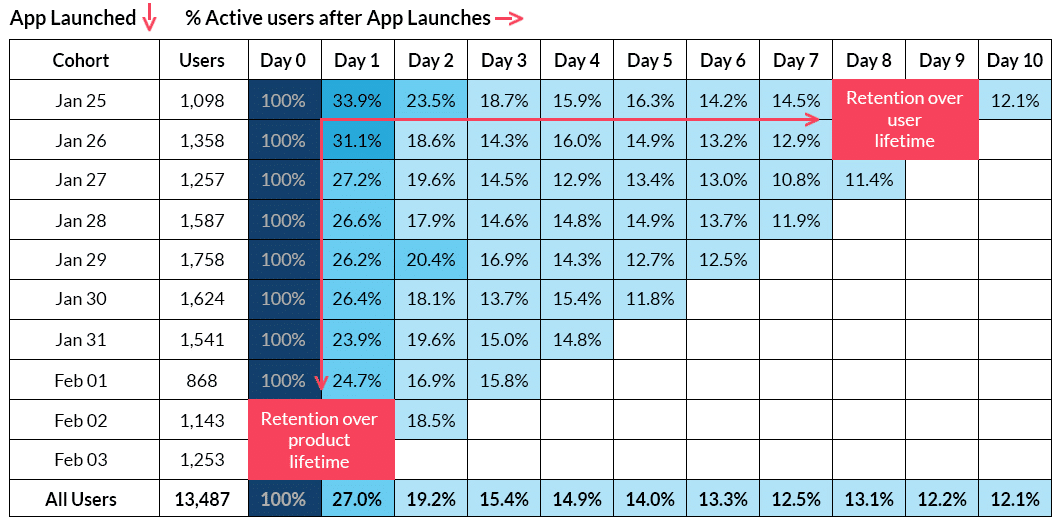
In the marketing world, a cohort analysis is used to show how different market segments perform over a predefined period of time. In other words, it’s a way to analyze user behavior and performance as groups. By looking at two or more cohorts, you can identify many key metrics, such as activation rate and retention rate.

Let’s say you’re a software company providing tech to streamline remote call center management. At the end of a particular month, you have acquired 100 customers. You can then split these into two cohorts: 50 customers who all signed up within the first week and 50 who signed up towards the second half of the month.

By doing this, you can compare the behavior of each group and use it to understand user behavior. If your customers who signed up in the first week had a higher activation rate than the second cohort, then you know for sure that acquiring customers early in the month is more effective.

How to Run a Successful Cohort Analysis

How to Run a Successful Cohort Analysis to Enhance Customer Retention
Image Source

Be Specific About Your Cohorts

You can split up all of your customers into different groups, but you should be focusing on a single metric at a time. For example, if you’re looking to improve retention rates, focus on that in one report.

If you’re a company that holds a weekly web conference to advertise your services to businesses, you could create a cohort of “weekly web conference attendees” and measure the increase in retention rates throughout the week.

Alternatively, if you wanted to measure your shopping cart abandonment rate, you could create a cohort based on “customers who added an item or items to their cart before 3 pm” and measure how shopping cart abandonment rates change over time.

Build a Strong Foundation

Diving straight into the cohort analysis without knowing what you’re looking for is unhelpful, risky even. Spending time, in the beginning, to find out where your customers are coming from and when they joined can really help when creating cohorts in later reports.

Let’s say you want to see a higher retention rate on your guided selling platform on your ecommerce store. Make a plan. You’re likely to need to know how many customers joined each site and when the first order was placed on each platform. This way, you can create a cohort based on a common point in time, such as when they all joined or the date of their first purchase.

Focus on Retention

How to Run a Successful Cohort Analysis to Enhance Customer Retention
Image Source

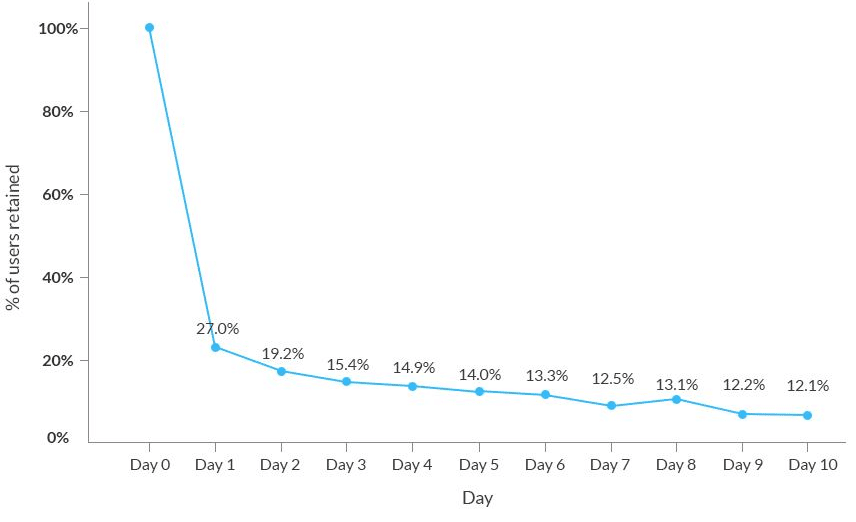
While cohort analysis can provide valuable information, it is most useful when thinking about retention. Make sure that you not only look at the numbers but also try and understand why they occurred and how these customers compare to others.

For example, if you’re a cloud based communications company, you might find that people are more engaged on a Thursday than on a Friday. You’ll want to consider why this is. Maybe it’s because you send more promotional material on Thursdays, or perhaps it’s because your support team is more responsive on this day of the week. This will help you to better target your customers and improve retention.

How Does Cohort Analysis Improve Customer Retention?

How to Calculate Customer Acquisition Cost And Minimize Expenses
Image Source

Now you know what a cohort analysis is, it’s time to look at the results. There are two main ways that a successful cohort analysis can help improve customer retention:

Higher Churn Rate for New Customers

One of the most important metrics you should consider when doing a cohort analysis is your churn rate. Put simply, a churn rate is the percentage of customers who have left your company for a particular period.

For example, if you acquire 100 customers in a given month and then 30 left within that same period, then your churn rate is 30%. A high churn rate can be very costly to a business as you’re constantly spending money on new marketing campaigns while also losing revenue from customers who leave.

A way to keep your churn rate low is to use cohort reports. These show you the churn rate of each group of customers during a certain time period, which can be particularly helpful when looking at monthly or quarterly comparisons. You can then work on strategies to increase revenue and brand loyalty.

Customers Become Less Engaged Over Time

Another common goal for doing a cohort analysis is to improve engagement rates by looking at how they vary over time. Essentially, you want to keep customers engaged with your business as long as possible so they will be more likely to buy from you again and recommend your product/service to a friend.

To do this, you can look at how your engagement levels change over time. This could be measured in terms of subscriber activity, such as logins and posts, or it could be the number of shares and clicks for a social media campaign.

Takeaway

Successful cohort analysis can be very helpful in identifying and understanding the needs and behaviors of your customers. This makes it easier for you to create effective retention strategies that will help to reduce churn rates while also increasing engagement levels.

It’s important, however, to understand what this data is telling you and how you can use it to inform your strategy before you start making any decisions. If you do this, you’re more likely to be successful with your cohort analysis and achieve the results you want!

Good luck and happy analyzing!

Jenna BunnellJenna Bunnell – Senior Manager, Content Marketing, Dialpad


Jenna Bunnell is the Senior Manager for Content Marketing at Dialpad, an AI-incorporated cloud-hosted unified communications system that provides valuable call details for business owners and sales representatives. She is driven and passionate about communicating a brand’s design sensibility and visualizing how content can be presented in creative and comprehensive ways. She has written for sites like CrocoBlock and LuckyOrange. Check out her LinkedIn profile

8 Strategies For Dealing With Difficult Clients

8 Strategies For Dealing With Difficult Clients

It doesn’t matter what you do, who you work with, or how picky you are with your customers—at some point, every small business owner, independent contractor, freelancer, and self-employed person has to deal with difficult clients..

But just because challenging clients are a part of running a successful business doesn’t make them any easier to deal with! Managing difficult clients is frustrating, time-consuming, and—depending on what they’re being difficult about—can have a significant impact on your business.

That’s why, as business owners, it’s imperative to know how to deal with difficult clients. When you know how to deal with challenging clients, you can better manage your customers and maintain your client relationships—even when your clients insist on being a thorn in your side.

But how, exactly, do you do that? Let’s take a look at eight must-know strategies for dealing with difficult customers:


1. Set Clear Expectations

Here’s the truth: some clients are going to be difficult no matter what you do. But many difficult client relationships can be avoided by getting on the same page from the get-go—and that means setting clear expectations from day one.

Setting clear expectations at the very beginning of your client relationships (and making sure your client understands those expectations) can help you avoid misunderstandings in the future—and can help you avoid difficult interactions with your client as a result.

When you start working with a new client, schedule a meeting to discuss and cement all the details of your working relationship. Walk through everything that could be relevant (or could be potentially misunderstood) in the future. This includes:

  • Your business background. You never want a client to say you misrepresented yourself or your business—so before you start working together, you’ll want to outline your business background, including years of experience in your industry, the type of projects you specialize in, and your experience with the type of project or work they’re looking to hire for.
  • Professional services. You and your client need to be on the same page on what, exactly, you’re being hired to do. What services are you going to perform for the client? 
  • Timeline. Many clients get upset when projects aren’t completed in a timeframe they deem appropriate—so make sure you outline realistic timeframes and project deadlines. And, in order to avoid any confusion, be as specific as possible. So, for example, if you’re a general contractor hired to renovate a kitchen, don’t just give a date when the project will be complete; walk through approximate timeframes for each part of the project, like demo, cabinet installation, and painting. 
  • Pricing. If you want to avoid client challenges, one of the most important areas to set clear expectations? Your pricing structure. Review your entire pricing structure with a client before taking on a project, including the total amount due upfront, payment terms, the payment schedule, when the final payment is due, and what happens in the case of a late payment or unpaid invoice, including late fees and interest charges.

Once you’ve reviewed all this information with your customer (this is the important part!), put everything into a written contract—and have the client read and sign that contract. Having a signed contract adds a layer of protection for future disputes; for example, if, after completing a project, the client doesn’t want to pay the full amount because they say it’s different from your original pricing, you can point to the contract—the contract that they signed—and easily resolve the dispute. (Written contracts are also much easier to enforce than oral agreements.)


2. Have Firm Boundaries

Setting boundaries is an important part of running a successful business—but it’s especially important when it comes to managing hard-to-deal-with clients.

Without boundaries, clients with a natural inclination towards being difficult can (and will!) walk all over you—and the relationship can quickly become unmanageable.

There are a few different areas where you’ll want to set clear boundaries with your clients, including:

  • Communication. Setting boundaries around your communication is a must, especially if a client can be difficult. Let your client know how and when they can get in touch with you with project-related questions or concerns. For example, you might tell them you’ll respond to emails or phone calls between 9am and 6pm, Monday through Friday, but text messaging is off limits—and you won’t respond to any communication requests on nights or weekends. Then, make sure to stick to those boundaries; once you respond to a late-night text message from the client—even after telling them that texting and after-hours communication is a no-no—you’ll likely find yourself inundated with texts for the remainder of the project.
  • Project scope. If you don’t have clear boundaries on what your project entails—and what it doesn’t—it can be easy for the project scope to expand. But often, difficult clients will request changes to the project and not want to pay for those changes—so set clear boundaries around the project scope from the get-go and make sure to draw up a new contract any time the client makes a request for a change.
  • Treatment of staff members and contractors. If you have employees or subcontractors working with a client, you want to make sure your team is being treated with respect. Refuse to tolerate any disrespect, inflammatory language, or other type of mistreatment from your client to yourself and your team—and if they step out of line, let them know the behavior is unacceptable.

3. Commit To Professionalism

When you’re dealing with a truly difficult customer, it can be easy for your emotions to get the best of you. But as a business owner, it’s important to stay calm, separate business from personal, and commit to a sense of professionalism in all your interactions with the client.

During, keep things professional. If you find yourself face-to-face with an upset or angry client, give them the space to share their frustration—but don’t mirror their anger. When you have to navigate difficult conversations or challenging project check-ins, be aware of your facial expressions and body language. Conduct yourself in a professional manner in all your interactions with your clients—even (and especially) when they’re acting anything but professional.

Side note: there’s a difference between keeping things professional and opening yourself or your team up for abuse. If you’re dealing with an exceptionally angry customer—and the customer is screaming, yelling, or being abusive—the most professional thing you can do is walk away from the conversation until they calm down.


4. Document Everything

As mentioned, one of the go-to’s for hard-to-deal-with clients is the “he said, she said” game; they’ll claim you said, did, or promised one thing—while you know that you said, did, or promised nothing of the sort.

Having a written contract at the start of the project will help to avoid a lot of these “he said, she said” misunderstandings. But there are plenty of opportunities for misunderstandings after the contract has already been drawn up—which is why it’s important to document all your interactions with the client.

Keep a record of all the phone calls with your client; after the phone call, write down the time, date, and what was discussed. If you have a video call, do the same thing. Keep all your emails and other written communication in a folder. Not only will having documentation of all your client interactions help you to address any misunderstandings with the client in the future, but it will also be helpful if you end up having to take legal action against the client (or they decide to take legal action against you).


5. Own Up To Your Mistakes

There’s a difference between difficult clients and unhappy clients. If the reason your client relationship is difficult is that you dropped the ball or under-delivered on your project, it’s important to own up to that.

If a customer is upset because of what they perceive to be a problem on your end, listen to how the client feels—and if their concerns are warranted, it’s important to take every step necessary to address the client’s concerns and right the situation

For example, if a client is being difficult—and, after a conversation, you find out the reason is that your crew has been arriving at the job site an hour late every day? Own up to the mistake, apologize to the customer, and take any steps necessary to ensure, moving forward, your crew arrives on time and ready to work—and follow up with the client to make sure that happens.

Bottom line? Unhappy customers are different from difficult customers; they’re unhappy for a reason—and as a business owner, it’s important to address that reason and fix it.


6. Don’t Take The Blame When It’s Not Warranted

It’s important to own up to any mistakes you make with your clients. But some clients will want you to take the blame even when things aren’t your fault—and in those cases, it’s important to hold your ground.

For example, if your crew shows up late to a home improvement job site, that’s on you. But if your client isn’t home to let them in when they arrive (and the job starts late as a result), that’s on them—or if there’s a natural disaster that shuts down roads and your crew can’t safely get to the job site, that’s on no one.

The point is, you always want to listen and acknowledge your clients—but you don’t need to accept the blame from a difficult client for situations that are out of your control.


7. Escalate The Situation When Necessary

Sometimes, you can do everything right when dealing with difficult clients—but you still don’t get the outcome you want or need.

And in those situations, sometimes the best thing to do? Escalate the situation. There are a variety of situations where you might need to take things to the next level when dealing with a difficult client, including:

  • The client refuses to pay for outstanding invoices. A non-paying client that refuses to settle an outstanding invoice (despite your best efforts) can negatively impact your business’ cash flow—and you may need to escalate the situation and send a demand letter or take them to small claims court in order to collect and settle the non-payment. You could also send the unpaid bill to a debt collection agency—and allow the collection agency to handle the debt collection/nonpayment issue for you.
  • Fee disputes. If you and your client disagree on the amount of money owed for a job or project—and you can’t come to an agreement on your own—you may need to have the dispute mediated by a law firm.
  • Breach of contract. If your client is in direct breach of a contract (whether that’s by ignoring unpaid bills for a certain amount of time or refusing to settle unpaid fees that are past due), it’s within your legal rights to take them to court for violating the contract.

Making the choice to take legal action against a client isn’t easy; not only can it make an already challenging client situation more difficult, but there are also significant costs involved (including the time investment and the legal fees to cover an attorney or law firm’s legal services). Before you decide to escalate a client situation, talk to a lawyer for legal advice—and make sure it’s the best course of action for you.


8. If A Client Becomes Too Difficult To Deal With? Just Walk Away

All of these strategies can help you more effectively navigate challenging client relationships. But if you’ve tried everything on this list and a client is just too difficult to deal with, the good news? You can always just walk away.

As a business owner, the decision-making power lies with you; you get to decide who you work with and who you don’t. And if a client becomes too much of a hassle, you can always walk away—and make room in your schedule for clients who are going to be easier to work with.

This article first appeared on hourly.io.

Deanna deBara - 8 Strategies For Dealing With Difficult Clients
-Deanna deBara is a freelance writer living in Portland, OR. When she’s not busy building her business or typing away at her keyboard, she enjoys spending time hiking in the Pacific Northwest.

how-to-increase-sales-by-improving-your-customers-buying-journey

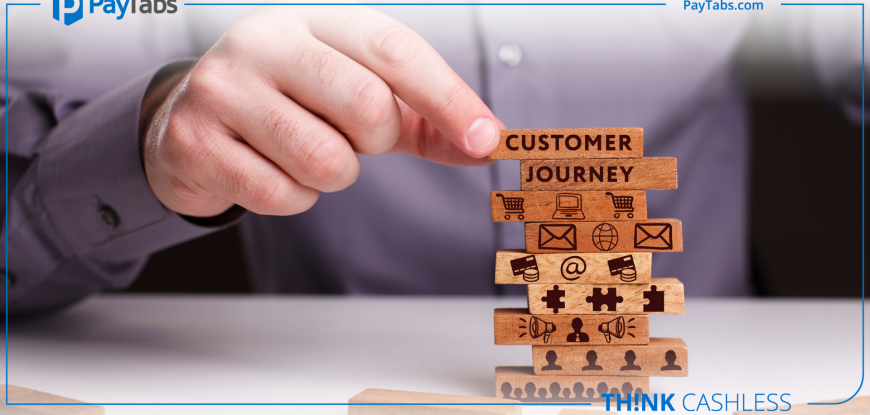
A customer’s buying journey is a path of interactions with the business. It covers all the points from the discovery to the final phase of purchase. In order to make your ecommerce business more effective, it is important to make this journey as smooth as possible. The idea is to stop the customer from leaving midway through the buying process. While every customer has their own unique buying journey, there are certain guidelines which an online business can follow to make the process more convenient and approachable.

Personalize:

As each customer is unique, it is imperative for an online business to ensure that the individual needs of a customer are properly met. This important strategy to attract online customers can take several different forms. You may have to personalize your website linguistically if you are catering to customers from different countries. You may also need to bring about customization for accepting different currencies. Ideally, online businesses should use progressive web apps methodology to give their clients a seamless experience. Personalization ensures that your clients are able to carry out their business in the most efficient manner possible. However, it should also be ensured that your website is still quick to load even after customization.

Attention to Analytics:

Data has become an important tool for online businesses everywhere. Organizations use data to devise new strategies, with an aim to make the buying journey of a customer smoother and increase sales online. It will also help in decreasing payment friction, which is one of the most prominent reasons behind cart abandonment. Another important step to take in this regard is to revamp your checkout page. Your website may also offer the choice to save some of the vital information, so that the customer does not have to add details every time they carry out a transaction. This will save time and energy of the customer.

Make it Interactive and Immersive:

Studies have shown that the customers react positively to online businesses that offer interactive and immersive experience. Since online transactions lack the personal rapport, the ecommerce businesses need to make an effort to replicate the real-life experience to increase sales online. This will also allow the clients to make informed decisions, further reducing the likelihood of incomplete buying journey. This step will also help in optimizing the product return ratio, where the clients had to send back the products which did not meet their requirements. As experience becomes more interactive and immersive, the buying journey will also become more productive.

Also Read: Boost sales conversion with the right payment integration strategy

Offer Assistance:

As online buying journey lack the personal touch, it is important that your website offers maximum possible assistance to the clients. There are several automated tools available in the market for implementing this strategy to attract online customers. Whether you choose to employ a chatbot or install a live chat function, it is highly likely that your clients will appreciate this additional help. These steps will also enhance customer engagement, leading to a loyal client base. Even if your business is not in position to offer 24/7 helpline, communicating official hours to your customers will increase the engagement level.

Identify Pain Points:

Since buying journey is a continuous process, it is important to recognize various pain points which hinder the smooth experience for clients. For some customers, the problem may lie with product discovery while others may face issues while checking out. To resolve these issues, it is important to look at the data generated through these transactions and undertake remedial measures. It is also vital that you update your online business with latest technological tools to boost safety and security.

Also Read: Grow Your Business by Offering Alternative Payment Options

PayTabs
Privacy Overview

This website uses cookies so that we can provide you with the best user experience possible. Cookie information is stored in your browser and performs functions such as recognising you when you return to our website and helping our team to understand which sections of the website you find most interesting and useful.