×

Tips To Choose the Right Payment Integration Method for Your Ecommerce Site

Category: Ecommerce

Tips To Choose the Right Payment Integration Method for Your Ecommerce Site

Tips To Choose the Right Payment Integration Method for Your Ecommerce Site

Advancement in technology is gradually making payment integration easier and simpler. However, as new entrants to the world of eCommerce, you may find it a little difficult to choose the right integration method for your eCommerce business. At present, there are three popular integration methods and in this article, we are going to discuss these options in order to help you choose the right option for your business.

  1. Hosted checkout pages

As a matter of fact, this option can be used by any type of merchant, whether small or big.

There are many reasons why small merchants should choose this as their checkout solution. First of all, there is no need to hire a software developer when you integrate it with your website. It also works well when your website is not PCI compliant.

Hosted checkout pages are also beneficial for medium to large-sized merchants, who have already designed and created their checkout pages. This is the quickest way to supplement your alternative payment method. Almost 60% of the shopping cart abandonment incidents take place because people are not able to use their preferred mode of payment. It is more prevalent in the countries where cards are not used frequently.

The benefit of hosted checkout pages for merchants:

It has the following benefits for the merchants:

  • PCI compliance is not complicated
  • No need to store card information
  • Ideal for quick global outreach
  • Supports all major credit cards and major currencies
  • Supports local payment options
  • Offers easy integration

  2. Payment API

If you are among the perfectionists who would like to exercise extreme control as far as design and user experience of checkout pages is concerned, a payment API is the right solution for you.

For card processing, payment API is the ideal solution whereas if you need both card processing and value added services such as coupons and catalogs, currencies and subscription billing, Payment Plus API should be tried.

It doesn’t require customers to leave the site in order to check out and makes checkout a simple process with minimum steps to complete.

The benefit of payment API for merchants:

It has the following benefits for the merchants:

  • The XML based API doesn’t require any specific programming language
  • A native mobile checkout flow can easily be developed
  • Easier PCI compliance through client-side encryption
  • Tokenization enables the sellers to save the card information of the shoppers so that the returning shoppers need not repeat the process all over again

Payment API makes the checkout safe and secure.

 3. Shopping Cart

If you are using any shopping cart such as Magenta or Prestashop, the “shopping cart” is the ideal integration method for you. It offers users almost the same benefits as they get in hosted pages. It is comparatively easier and simpler to setup and it doesn’t require you to make any payment.

Choosing a payment processor

Your selection of the integration method is very important to offer better user experience and it decides your future success in the eCommerce space.  But, there are other factors as well that are no less important. Make sure that the payment processor you choose meets all your business needs and completely fits into your business model.

Make sure your payment processor is able to upgrade their technology and services to match your needs when you grow.  Make sure they offer the functionalities you require at present and might require in future.

When you come to PayTabs, we sincerely listen to your needs and answer your queries.  We have imbibed a culture of striving to meet your business requirements. We are also determined to resolve the issues you face during your journey to become a successful eCommerce entrepreneur.

Get in touch with PayTabs today and talk to a consultant to discuss your business needs and how to achieve higher conversion.

Should You Use Chatbots for Your Small Business?

Should You Use Chatbots for Your Small Business?

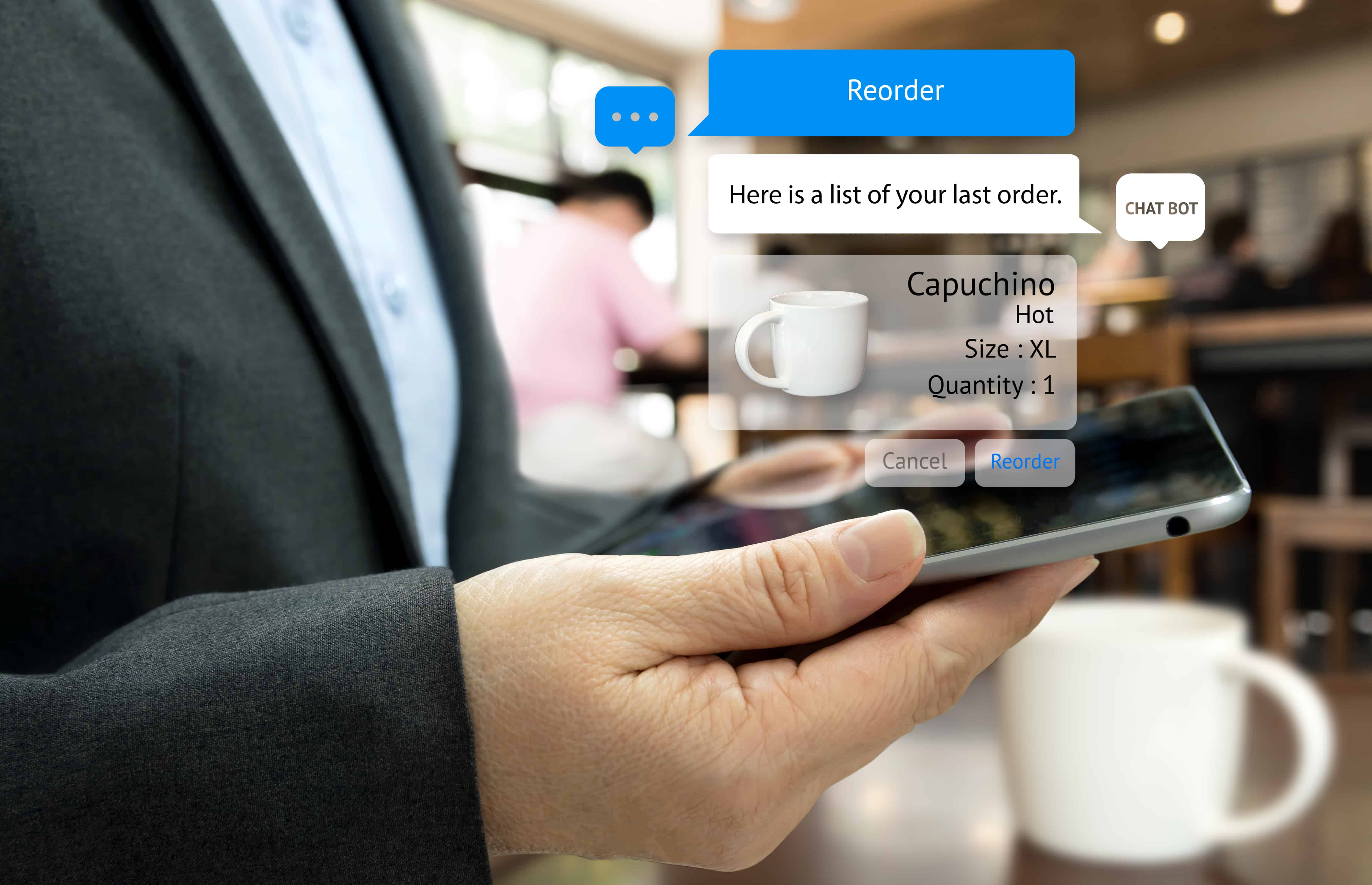
Automation is the way ahead, and businesses are beginning to realize that. One way or the other, companies are trying to automate as much as possible, thus minimizing the need of human intervention. So far, it has worked well. But while the big players reap the benefits of chatbots, can small businesses enjoy some of it too?

The answer is yes. Chatbots are not grand mechanisms suitable only for big conglomerates. Innovative yet simple, even a random blogger could use chatbots to be more efficient.

Analyzing the benefits

Here is how chatbots can improve things for small businesses:

1) Improving the reach

With chatbots, you can be there for your customers 24×7. Chatbots ensure that nothing, from interaction to complaints, go unnoticed. The interactivity goes a long way in growing the reach of your business and thus, the overall growth.

2) Simple to use

Many innovative ideas came and went without making a mark. The reason chatbots stuck was their sheer simplicity. Understanding chatbots is something that even the most non-technical person could do. While it is no big deal for a business-owner, it is an even smaller deal for the customers. In other words, using a chatbot is far simpler than many other ways of interacting with a business, which is why chatbots are fast gaining popularity among users.

3) Cheaper than you guessed

Once you get a chatbot, everything else is free of cost. Chatbots do not need lunch breaks, vacations or weekends. After the initial investment, you can have chatbots working 24×7 without worrying about their salary. Compared to humans, it is both more effective and cost-efficient.

4) Customizable

When we hear the word “bots”, we imagine pre-programmed robot texts that are boring at best. However, the new-age chatbots are anything but boring. Highly customizable, chatbots could be tailored to suit the specific needs of your customers. You have to program all the responses, of course. But from the user’s perspective, chatbots appear like cool agents who have a quirky response to everything.

Few things to consider

Chatbots are great, of course. But that doesn’t mean they are the solution to all your problems. There are some reasons why chatbots may not be the best solution for your business. Here are some:

1) Alienation from the customers

One of the biggest (and perhaps rightful) concerns small businesses have is getting alienated from their customers. Chatbots are great for programmed responses, but even the Machine Learning-powered chatbots could not hope to compete with the level of personal touch human interaction provides.

2) Not everyone’s cup of tea

One thing to keep in mind is that chatbots work best with B2C businesses, where template answers to predictable questions get the job done. However, in B2B companies where complaints are raised only in serious situations, chatbots are largely ineffective. Thus, big or small, the type of business largely defines the need of chatbots.

3) Skewed demographics

As a business owner, you would prefer your audience to be diverse (until and unless you are extremely niche-specific). However, chatbots have been found to be the opposite of diversity. Majority of chatbot users are teenagers, while an overwhelming majority are Americans. Restricting your audience to a single country and age group is not the most desirable outcome you might have hoped.

Conclusion

So, chatbots are not meant for everyone. But, for the large part, they are agents of innovation and effective in most cases. Especially if you are a B2C business that needs to be in touch with your customers at all times, nothing beats chatbots. In the coming years, we will see a growing use of automated tools for customer interaction. It is your chance to be part of the future, now.

How PayTabs is making it super easy to manage your online store’s payment process

How PayTabs is making it super easy to manage your online store’s payment process

For any brand that has e-commerce store, a good payment gateway partner is of paramount importance to realize the full potential of the business. A good payment gateway must have a great user interface, should be easy to integrate, non-intimidating, aid in the conversion process and finally, make the post-conversion process easy.

Now, there are quite a few payment gateway providers in the market. Which one you choose largely depends on your exact needs. Some provide to option to offer customized pricing. Others allow a simple a quick deposit of funds. Some allow you to get up and running under an hour. And others allow you to accept payments in multiple currencies. But the one provider that has been doing all of this and more is PayTabs.

Easy to integrate with Shopify, Opencart, Magento and WooCommerce, PayTabs offers everything you need to start running and stay in the business quickly and easily. In fact, it offers many native payment options like Alipay, Skrill, Ukash and giropay to ensure your local customers complete the transaction hassle-free.

One of the best features of PayTabs is its PayPage, which can be used for online invoicing. Even if you don’t have a website or CRM, you can simply send the payment link to your customer to receive payment via credit card or debit card. The system also comes with an invoicing solution which makes you look professional and also allows you to keep track of the payments received.

Track your payments on your phone

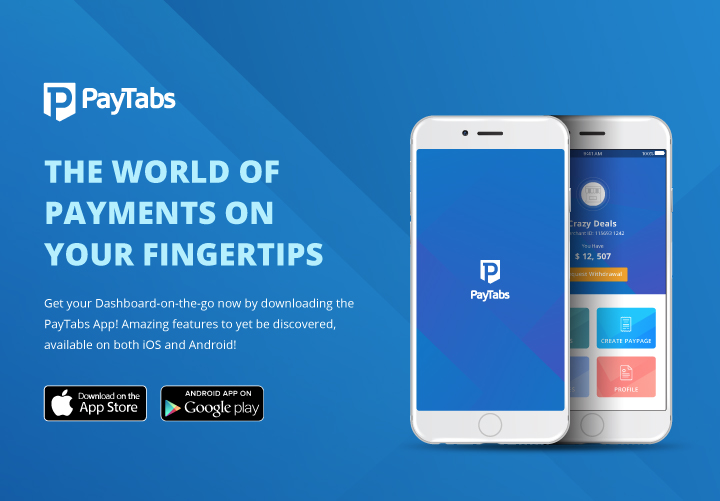
With the newly launched PayTabs app for both Android and iOS, it has become a breeze to keep track of payments on the go.

If you are a merchant using PayTabs, you can now access your PayTabs dashboard via the app. The app gives you the ability to request a withdrawal and also create PayPage invoices. To a merchant who is constantly on the go, these features come as a welcome relief from having to carry their laptop everywhere.

Christina

Take Christina, for example, who runs a specialist tour agency for women travellers. She does spend a few days in office but otherwise she is always on the trips she has organized. Her trips are popular because of strong word-of-mouth marketing and bookings for future trips keep happening everyday. This meant that Christina had to check her bookings daily and also spend time making invoices between her trip.

Then, she discovered PayTabs. Using the app, Christina is now able to check new bookings on the app and create invoices in a jiffy. She is able to accept payments without having to direct users to her website and just sending the payment link over an SMS or a messenger.

Andrea

Andrea started her business in eco-friendly jewellery which took off like wild fire. The jewellery raw materials were sourced from the Ecuadorian forests and the artisans locally crafted the jewellery with the help of international designers. As a result, Andrea had many clients from different countries wanting to buy jewellery from her, place repeat orders with ease and pay easily.

Andrea adopted PayTabs, which allowed her clients to pay in their local currency. This lead to a higher adoption rate for her products as they were easier to procure compared to competitors. With PayTabs for iOS, Andrea was able to quickly check for payments, generate invoices on time and request withdrawals easily, helping save time and efforts.

As an entrepreneur, she could maintain her accounts easily no matter where her customers came from.

Built keeping in mind the most important requirements for an online store owner, PayTabs is here to make the payment gateway process simple and effortless. Try it out by downloading the PayTabs app now.

For iOS -You can refer to the link https://goo.gl/FwjVGv to download.

For Android – You can refer to the link https://goo.gl/hjo4ba to download.

The complete guide to launching your very first online store – tools and strategies inside

The complete guide to launching your very first online store – tools and strategies inside

“If your business is not on the internet, your business will be out of business” – Bill Gates

Starting an online business isn’t a trend but a necessity. It is comparatively easier to set up than a brick-and-motor store, less resource intensive and allows you to experiment and iterate quickly as per your customer’s demands. There is a pot of gold at the end of the rainbow… and here’s your guide to get started.

Find a problem to solve: From selling cars to buying accessories to finding dates, the digital world is uniquely finding ways to solve problems by making lives convenient, and   saving time and money. The key to create a successful business online is to not only find the right problem to solve but also have the expertise and skills to solve it. What is your core expertise? What problems do people face in that industry? Why are YOU the best entrepreneur to do this job? Once you have the answers, you’ll know what your online business will be.

Build your website: Your website is your store front. It’s key to determining how you’ll sell and how much time, effort and maintenance you are willing to put up. You may have a store with hundreds of products which will need back end management that you’ll have to think through like updating stocks, offering discounts and being search engine friendly. In this case, you’ll have to make your choice between options like Shopify, WooCommerce, Open Cart, Get Shop and other such services based on their terms and feature list.

Write copy that sells: This is one of the most important parts of your online business. Once people come to your website, they’ll give you a minute or less to make your pitch. Your content will have to be cutting edge, to the point and push people towards the sales funnel. Explainer videos and infographics are strongly recommended to deliver your punches in the shortest possible time.

Choose a payment gateway: A payment gateway is a very important feature for your store. Its functionality will ensure that you can get paid not only in your native currency but from anywhere in the world where people can pay in their own currency and you can receive the money in yours hassle free. The right payment gateway can ensure you can reach any corner of the earth with your products.

Choose a fulfillment partner: A fulfillment partner is as important as your payment gateway. If your products have the chance of getting damaged in transport, you’ll have to find someone who can deliver with care. Some countries have restrictions on the products you can ship and you may need to work with different fulfillment partners who know the local regulations and ensure you aren’t selling anything that can’t be delivered in that country.

Start with PPC and then jump in to SEO: Pay per click advertising on Facebook and Google will allow you to do a quick market validation. Start this as soon as your basic website is ready. You’ll know if customers are understanding your website and products and if they are willing to trust you and make the purchase.

Get social: Social is a great place to build your community. Get together people who have similar likes and you’ll eventually find customers there.

Use email marketing: Build your email list from day one and offer incentives for people to sign up. Email marketing will allow you to sell, up-sell and cross sell, automate your communication and be in your customer’s inbox.

Go on, try it for a few months until you have proof of market. Your online store, if done well, can fetch amazing returns.

The top 5 business skills that you must hone as a small business leader

The top 5 business skills that you must hone as a small business leader

Running a small business is not an easy thing. For starters, you are always wearing multiple hats and switching roles from a sales director, to a marketing guru, to an HR person to a visionary leader. That is because running a successful business and driving it towards growth requires more than a good idea. Great and effective leadership can make or break a small business. While some of us are born natural leaders who take to running a small business like fish takes to water, there are others who learn on the go. Whichever category you fall in, it’s necessary to understand real leadership skills since that is what is going to help you respond to changes, adapt to new requirements, pull the pack together and rise to new heights of success.

So here you go – in no particular order, here is a list of 5 skills that will see a small business owner through all challenges and will come in handy in growing their businesses.

Communicating well– Ensure that whatever you communicate is clear, precise and consistent. It is not enough to have a great vision unless you clearly communicate it. A true leader should be able to communicate the business’s vision to employees, investors and customers alike. Employees and investors should also be aware of goals and objectives of the business. A series of miscommunicated objectives can be detrimental to your business. It is also important to let your employees know about what is going on and what is expected from them. And to achieve this clear communication is paramount.

Being a good listener- Most of what we know and learn comes from listening. Being a good listener is one of the most important skills you can possess as a small business leader. Listening to your employees will let you stay in touch with what is happening at the operational level. And will also contribute to employee satisfaction. Listening to your customers will let you know the pulse of the market and how they feel about your business. Developing this skill will also encourage you to ask for opinions, feedback and ideas. Enabling you and your business with different perspectives and newer ideas. Needless to say keeping both internal and external customers is important for a small business.

Not fearing failure and bouncing back – This is probably the biggest armour you will need. There is no great business leader who has not experienced the lows of failure. The faster you can accept and get out of the trough of depression, anxiety, disappointment and frustration, the better. Be ready to handle failure – as and when it comes. Mistakes are bound to happen. But running a business without making mistakes is impossible. So why fear them? A good leader will not fear making mistakes; he/she will, in fact, turn them into a valuable lesson. How you bounce back from them matters most. Accept your defeat with humility, learn from them and move on. Take ownership of the mistakes and let employees own the successes.

Sales –As a small business owner, this is probably the single most important skill that you need to learn as a business owner. After all, its sales that drives a business. Essentially, sales skills are nothing but excellent communication skills. It’s about understanding your buyer, it’s about listening more than talking, it’s about skillful persuasion and getting others to agree to what you are saying, it’s about learning the art of negotiation and building self-confidence. Understanding the whole sales process and honing the skills needed to crack a deal should help you for as long you are in business.

Accountability – A small business has fewer people taking care of a varied set of functions. This may make setting expectations tougher and sometimes ambiguous. As a small business leader learning to set clear expectations and communicating what is expected out of each contributor is essential. This will help set accountability in place. And being accountable as a leader for the business will help you lead from the front. Leading from the front or by example is something you are always told is expected out of leaders. This is true for small business also, be accountable and an inspirational leader.

Your skills as business leader is important since finally its you who can make a huge difference in how your business is being built and where it goes from there. What you make of yourself as a leader and your business is all up to you.

PayTabs
Privacy Overview

This website uses cookies so that we can provide you with the best user experience possible. Cookie information is stored in your browser and performs functions such as recognising you when you return to our website and helping our team to understand which sections of the website you find most interesting and useful.