×

9 Things to Look For In a Payment Gateway

Tag: international payments

9 Things to Look For In a Payment Gateway

9 Things to Look For In a Payment Gateway

If you are setting up an e-commerce store, one of the most important things you will be looking for is a payment partner who is going to help you enable the whole payments process.

With the right payment partner, your customers will be able to pay you easily and is more likely to come back to your website. There is just one small problem – how do you choose the right payment gateway?

With the market cluttered with several payment gateway options, it might be hard to choose the right one. In order to choose the right processor, you should do some homework and consider some points that are relevant to your business needs.

So in this article, we are going to explain 9 important things to be considered before you choose your payment partner.

  1. Look into location and incorporation details

Most of the times, the ideal payment gateway for you should be the gateway that is from the same location/country, your business is incorporated in. The corollary is also true.  For example, if you want a European payment gateway for your business, you need to incorporate in Europe itself.

  1. What’s the pricing and the providers’ fees?

It is extremely important to know the fee structure of your payment processor, if your business model is extremely price sensitive. Most of the fintech companies fall into this group and a slight variation in prices can alter their profits and may even turn it into loss.  Don’t get carried away by the advertisements that announce lowest fees or discounts, as it just might act as a catch to attract clients. Find a payment gateway provider that offers transparent fee structure without any surprises afterwards.

  1. What’s the technology

The bottom line is that you should choose a payment gateway that is supported by robust technology. This should not only offer simple, user-friendly solutions but also protect all financial transactions against fraud.  Also, your payment gateway should be secure enough to protect all your customer’s data and also have lower processing costs.

  1. How good is the support

Operating in a global market involves many unexpected and occasional incidents that can be bad for your business. That’s why support is considered to be a crucial factor to instantly fix the problems you face. Support should be simple and hassle free and ticketing system should be robust and fast.

  1. Does the operator offer international payments?

Check whether your payment gateway accepts international payments. If you are a growing business which is looking for selling to the global customer in the future, you might want to go with payment gateway which accept international currencies and offers alternative payment options. While local payment providers might be cheaper in certain cases, global payment gateways like PayTabs come with extremely attractive features like multi-currency payments, acceptance of a variety of cards, settlements and alternative payment arrangements. The latter is probably the better option if you are looking for revenue from around the world.

  1. What are the safety and security features

It is extremely important to ensure the safety and security of your customers, while they purchase online.  Maximum frauds happen while your customers try to make payments online.  There are different ways of protection that a processor can implement such as 3D secure payments, verified by Visa, and token system etc. Your gateway should always follow the guidelines of PCI to minimize the chances of frauds.

  1. Regular payments

If your business model requires short-term payments and settlements, it is ideal to go for a processor that doesn’t expect you to wait too long. Check the cost of the transfer and make sure that the fees are not too high. Always check what your payment gateway is charging for wire transfer. Some gateways charge a low fee and some might ask you to pay a higher fee.

Make sure that the rolling reserves are kept to a minimum. Rolling reserves is a kind of money that a payment processor or a bank can keep with themselves for a period of three to six months as security money against possible charge-backs.

  1. Does it allow invoicing

It might make sense to go with a payment gateway which offers built-in invoicing services. This not only makes it easier for you to raise instant invoices for the customer but also eliminates the need to move to another platform for invoicing.

  1. Reporting features

Another important thing to check is whether your payment partner is offering detailed reporting services. Once your business starts, you will want to review the transactions, review chargebacks in any, or do an analysis of any extra charges that you might have incurred while using the gateway. Try to go with a gateway that offers a better user experience.

There might not be a “perfect payment gateway” that fits the needs of every business. But its worth going the extra mile in order to find your right payment partner since a bad choice will not only cost you money but also your customers. The one thing to probably always keep in mind is the security aspect. The right partner will help you provide all the necessary tools for helping your business grow.

Currencies Form the Core of Payments

Currencies Form the Core of Payments

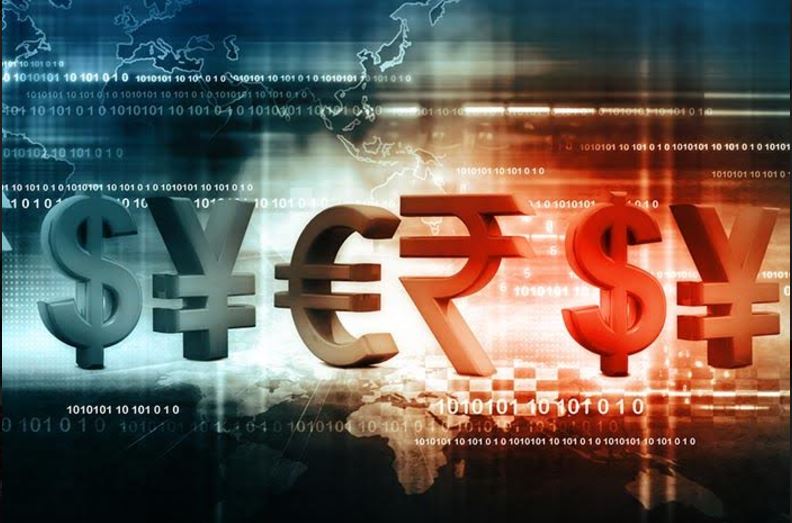
It’s a no-brainer! Everybody out there knows that to buy or sell any product or service through any medium, one would need a transacting currency. The status quo on most transactions, whether online or offline, is the fact that you would need to pay in the currency of the country where you are buying the product from, even if it is online.

But, with the advent of global e-commerce, the status quo on currencies while transacting becomes a deterrent. It is largely due to the willingness of most payments solution providers not to deal with the cumbersome regulations in place in most countries which provide a hindrance for multi-currency payments being made online.

It is not as much as a regulation problem, as it is a regulatory acceptance problem. Most regulators, as in central banks haven’t yet figured out a way to regulate payments in foreign currencies made in multiple currencies through the digital medium. Barring the most accepted currency, i.e. the US Dollar, which is largely used as a de-facto foreign exchange currency across the world, regulators are mostly wary about international payments made in other currencies, especially online.

Having said that, most developed countries and a few forward looking emerging economies have updated their regulations to allow for payments in multiple currencies. However, contrary to popular belief, there aren’t many providers in the market, who possess a seamless global payments processor.

PayTabs has always been ahead of the curve in terms of innovation and one of our key differentiating factor is the fact that we accept 160+ currencies on our platform.

To learn more about our payments platform, click here. Moreover, if you are interested, you can sign up for a free demo as well.

We encourage you to comment on this post, by providing your insights and viewpoints.

The State of Global Payments: Part 2

The State of Global Payments: Part 2

In one of our earlier posts, we touched upon the upsurge in non-cash transactions across the world and how developing countries are driving the growth of online/digital payments. We looked at some hard numbers from Capgemini’s World Payments Report which justified the growth in non-cash transactions across the world.

In this piece, we will look at key trends that are key to driving global payments in 2017 and the future:

  1. Technology vis-à-vis International E-Commerce: It is indeed true that international transactions have increased in recent times but the subsequent pace of developing fast, secure, transparent and efficient solutions have not quite been there. Currently, there’s a need for more payments solution to cater to the growth in international e-commerce.


  1. Need for Agility and Pace: Whilst the growth in FinTech investments over the years, there is currently a tremendous hunger in the marketplace, for companies to deliver more instant gratification moments in terms of payments and flexibilities in payments solutions. Which means different types of payments solutions accepting multiple currencies.


  1. Enterprise Payments: As per the World Bank’s Cost of Sending Remittances report, checks are still prevalent in most organizations across the world, especially smaller organizations. As of 2015, 90% of small organizations across the world, used checks for making payments, primarily to freelancers and commission based sales force. Large banks and credit card technology companies still dominate the international payments space, which is plagued by complexities and very high fees. There’s a huge scope for new age payments solutions providers to solve some pressing international payments issue in the B2B space.


  1. The case of the Unbanked: According to a Citibank report in March 2016, there are still 2.8 billion unbanked and underbanked people in the world, especially in developing countries, where FinTech solutions have outpaced the penetration of legacy banking. The key to the growth of FinTech and Payments solutions has been because of the huge growth in mobile payments, aided by the tremendous penetration of mobile in developing countries.


  1. Banks and Technology need to be friends: Banks need to accept and recognize the fact that digital payments can do much more than automation. Digital and online payments solution providers shouldn’t view banks as their adversaries, rather recognize the value that they are adding to the global financial system, thereby cultivating opportunities for greater innovation and efficiency through collaboration.


  1. Transparency: There’s been a paradigm shift in the needs of the global payments market, in the context of more transparent pricing, flexibility in integrations and innovative customer service. It is an imperative for global payments solution providers to track all transactions in the entire payment process/cycle to ensure transparency.


Therefore, as you can probably gauge that despite growth in FinTech and digital payments, there remains a lot of opportunities/gaps in the marketplace that needs to be fulfilled/filled.

We would love to hear your viewpoints in the comments below and click here to experience a new economy payments solution that truly manages to fill existing gaps and adds tremendous value for your business.

Click here to read State of Global Payments: Part 1

PayTabs: Not Just Any Payment Gateway

PayTabs: Not Just Any Payment Gateway

“People are the best show in the world. And you don’t even pay for the ticket.” – Charles Bukowski

There are two elements in that quote which resonates with the core business philosophy of PayTabs, i.e. People and Payments. PayTabs began as an idea with the sole mission to create a simple and secure platform for people and organizations to transact around the world.

At the heart of it, the mission seems simple enough, after all people are buying and selling in the new digital economy all the time. But the faultlines begin to appear once you deep dive into solving the problems of the payments processing industry, fuelled by the rapid e-commerce growth globally.

The problems are pretty striking when you look at it from a bird’s eye view:

  • Gap in the market in the context of multiple currencies being accepted as payments by an ecommerce platform.
  • End to end authorization, technology, infrastructure and services in the payments space being offered by a single solution provider: There aren’t that many players.
  • Security and Fraud Prevention is a major concern for the industry.
  • Not many alternative payments options available with majority of competitors in the industry.
  • Last but not the least, hidden charges by many competitors brings ambiguity to the minds of the merchants.

In the view of the above problems, PayTabs has created products which solve all of the above problems and thereby providing a breakthrough for the industry:

  • 160+ Currencies accepted on the platform.
  • Whether it’s multiple channels, schemes, acquiring banks, multiple shopping cart platforms, security infrastructure and systems, risk management and merchant services, we have you covered in all aspects in the context of building, operating and growing your e-commerce business.
  • Dual layers of fraud management infrastructure, dedicated fraud and account management.
  • 130+ alternative payments options designed to intelligent recommend you options that support your overall business goals.
  • No hidden charges whatsoever, we are completely transparent in our pricing.

For further insights on how we can truly add value to your business, visit our site. Moreover, you have an option of signing up for a demo to experience the true power of our technology.

PayTabs
Privacy Overview

This website uses cookies so that we can provide you with the best user experience possible. Cookie information is stored in your browser and performs functions such as recognising you when you return to our website and helping our team to understand which sections of the website you find most interesting and useful.